1. Going online is the peak
The most common failure pattern: The hype at launch is the peak of the entire project lifecycle.
- 1.Before going liveMarketing hype, price surges, and the community goes wild
- 2.A few weeks after launchThe freshness faded
- 3.Without continuous operation, users churn and activity drops to zero
- 4.After 3-6 monthsThe project has been quiet
A healthy Web3 project is just the beginning, not the end. But too many teams set going live as their goal—spending money and making products, then losing everything.
2. Treat tokens as products
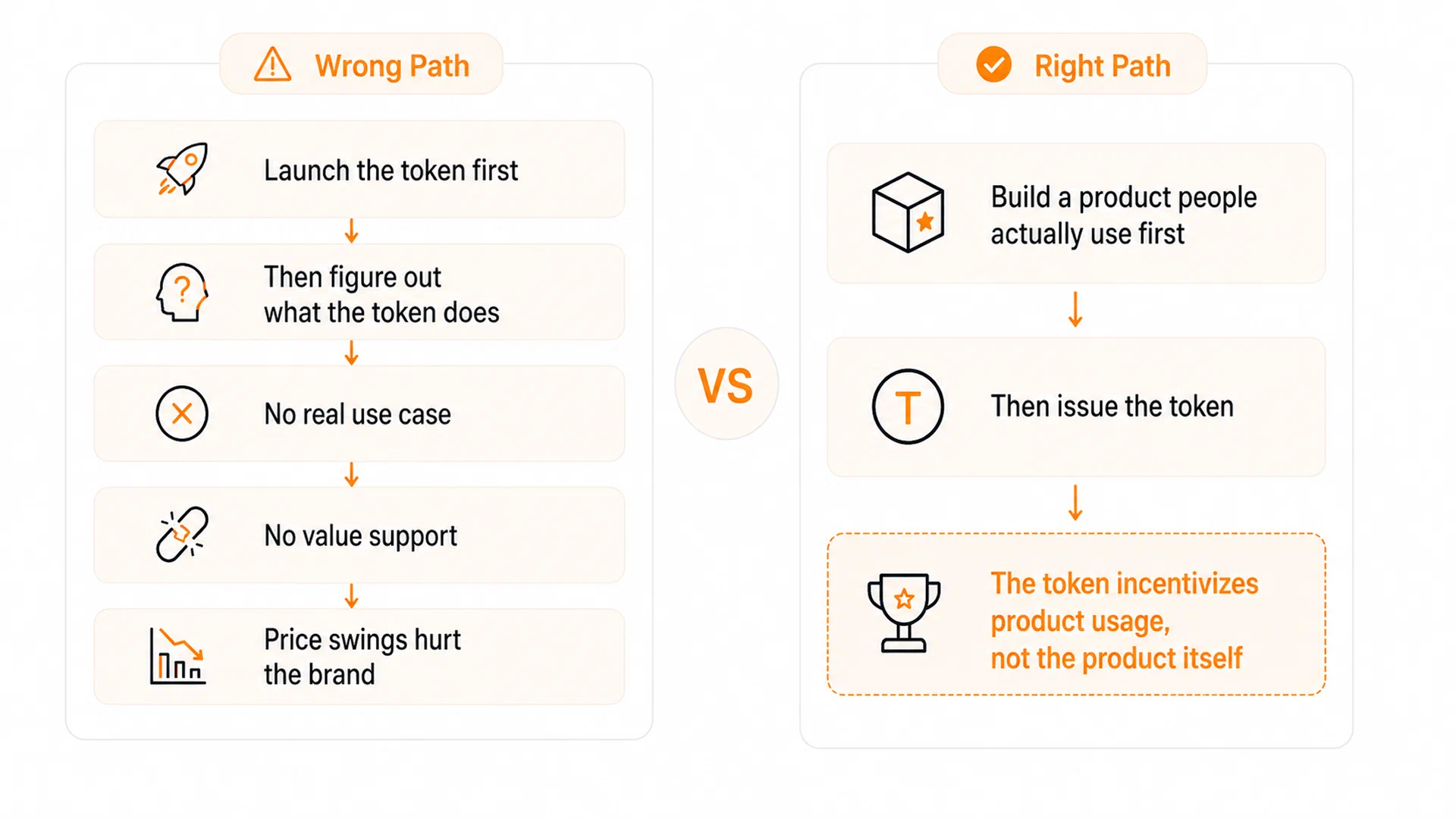
Many projects put the cart before the horse: launch tokens first, then think about what tokens can do. As a result, the token has no real use cases, its value is unsupported, and when the price drops, the project collapses.
Truly sustainable projects: first create products that people use, then issue tokens—tokens incentivize product usage, not the product itself.
3. Severe insufficient operational investment
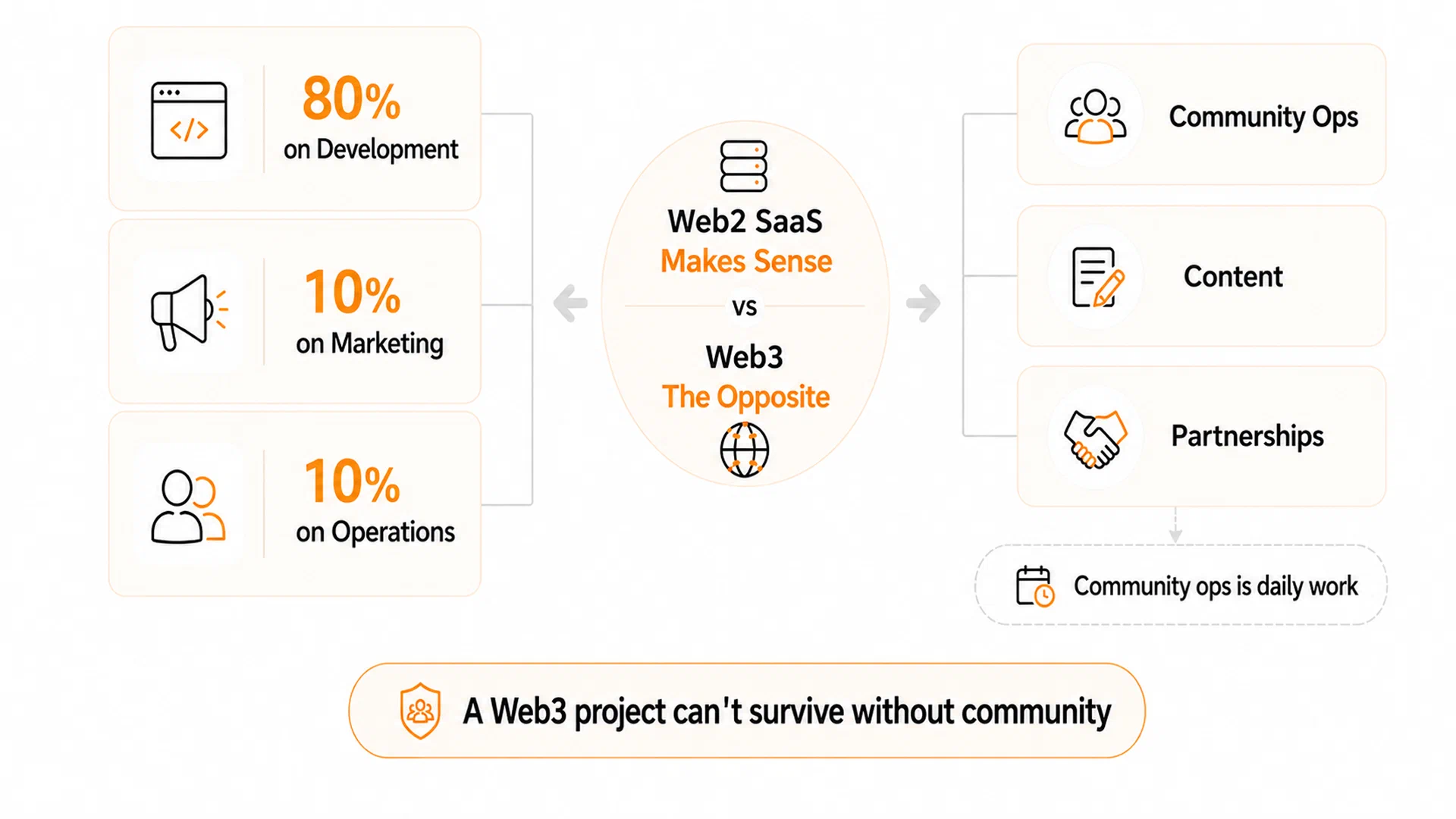
Many teams spend 80% of their budget on development, 10% on marketing, and 10% on operations. This ratio may be reasonable for Web2 SaaS, but completely opposite for Web3.
Web3 projects require ongoing community operations, content output, and collaborative expansion. Web3 projects without communities cannot survive, and community operations are daily dirty work.
4. Unbalanced team structure
Typical Failing Team Profile:
- 1.3 technologies, 1 product, 0 operations
- 2.The founder comes from a technical background and looks down on "operations" and "marketing."
- 3.Believing that "good technology means users"
The real situation: Users come here not because of good skills, but because someone tells them what they have here. Projects without operations and content don't even have a chance to be seen.
5. Commonalities of Projects That Truly Survive
Several successful projects I have tracked share these common traits:
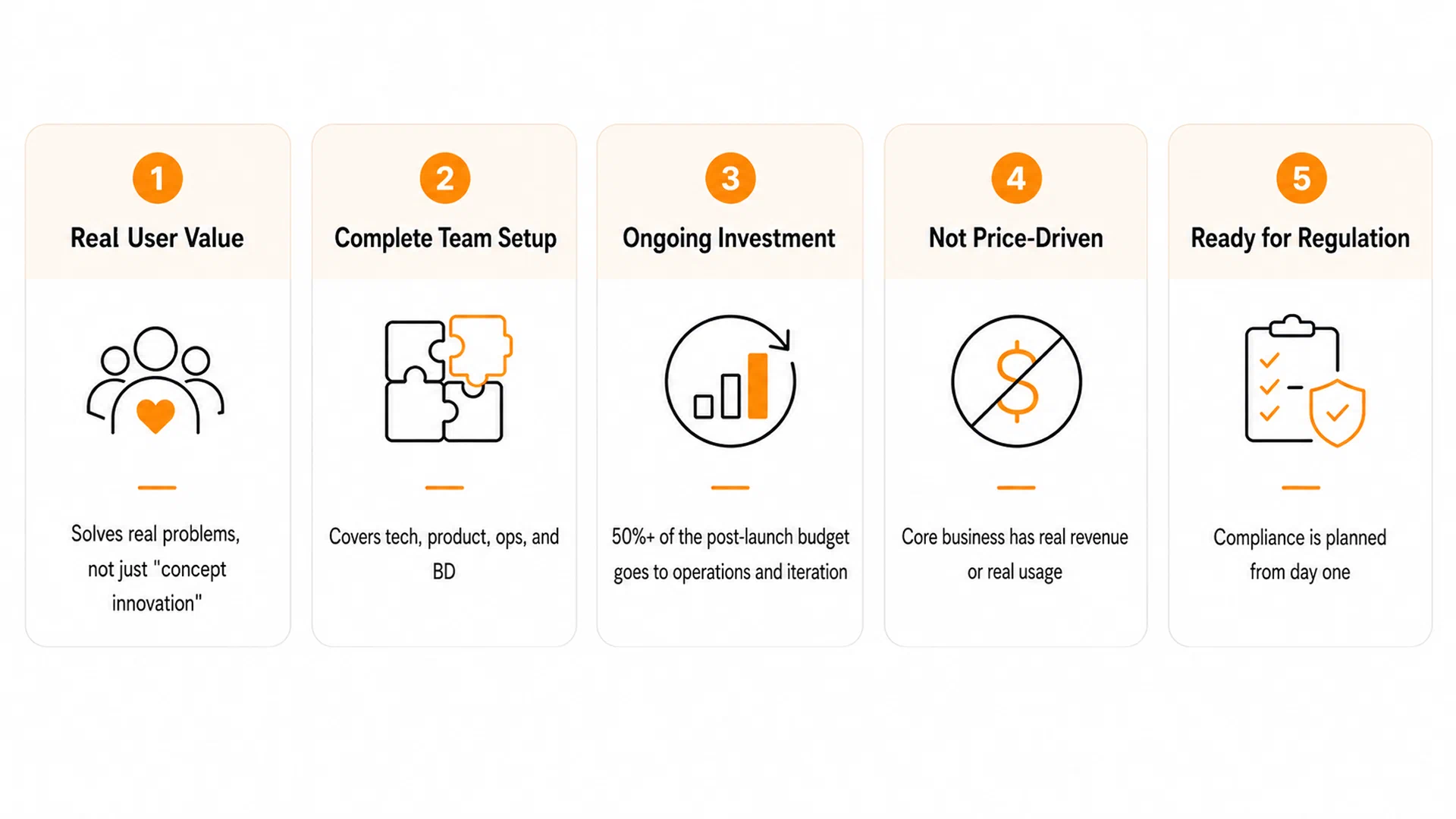
- 1.Real value for users: solving real problems, not just "conceptual innovation"
- 2.A complete team structure: technology + product + operations + BD all included
- 3.Ongoing investment: 50%+ of the post-launch budget is allocated to operations and iteration
- 4.Not dependent on coin price: Core business has cash flow or value beyond the price of the coin
- 5.Facing regulation: Compliance planning is in place from the start, rather than waiting until problems arise to find solutions
There are no shortcuts in Web3. Projects that survive are essentially not much different from Web2 startups that survive—making things that people use, sustaining investment, having a complete team, and facing reality.