1. The audit report is not a "certificate of approval"
Many teams mistakenly believe that passing the audit means contract security, but this is a misunderstanding. An audit is a review of code at a certain point in time and within a certain scope, and it cannot guarantee that problems will not occur in the future. Vulnerabilities and being attacked are two different things; audits can detect vulnerabilities in known patterns.
When reviewing audit reports, focusing on the number of "fixed" and "confirmed" is a more trustworthy signal than "no issues" and "discovering and fixing N issues."
2. Top vs. Central Audit Firms
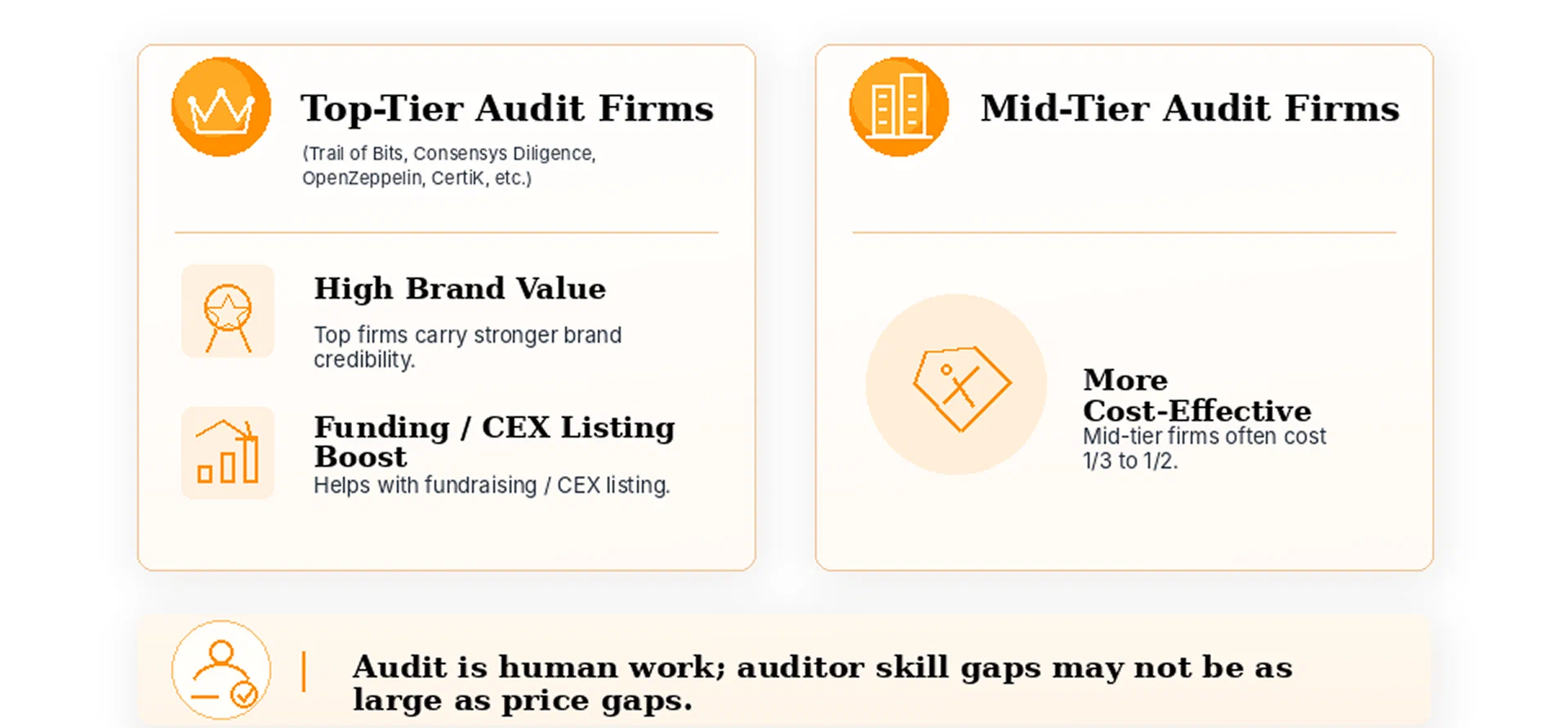
Leading companies (such as Trail of Bits, ConsenSys Diligence, OpenZeppelin, CertiK, etc.) have high brand value, which adds points to external financing and listing on CEXs. Central companies are priced between one-third and half the price, but the gap in auditors' skill levels isn't that big—auditing is essentially human work.
3. Reading reports is more reliable than looking at companies
Before choosing a company, read at least three audit reports from similar projects in the past. See: whether the problem found is truly valuable (not just a makeshift item like "unused variables"), whether the problem description is clear, and whether the fix suggestions are specific.
4. One-time vs. Continuous Audit
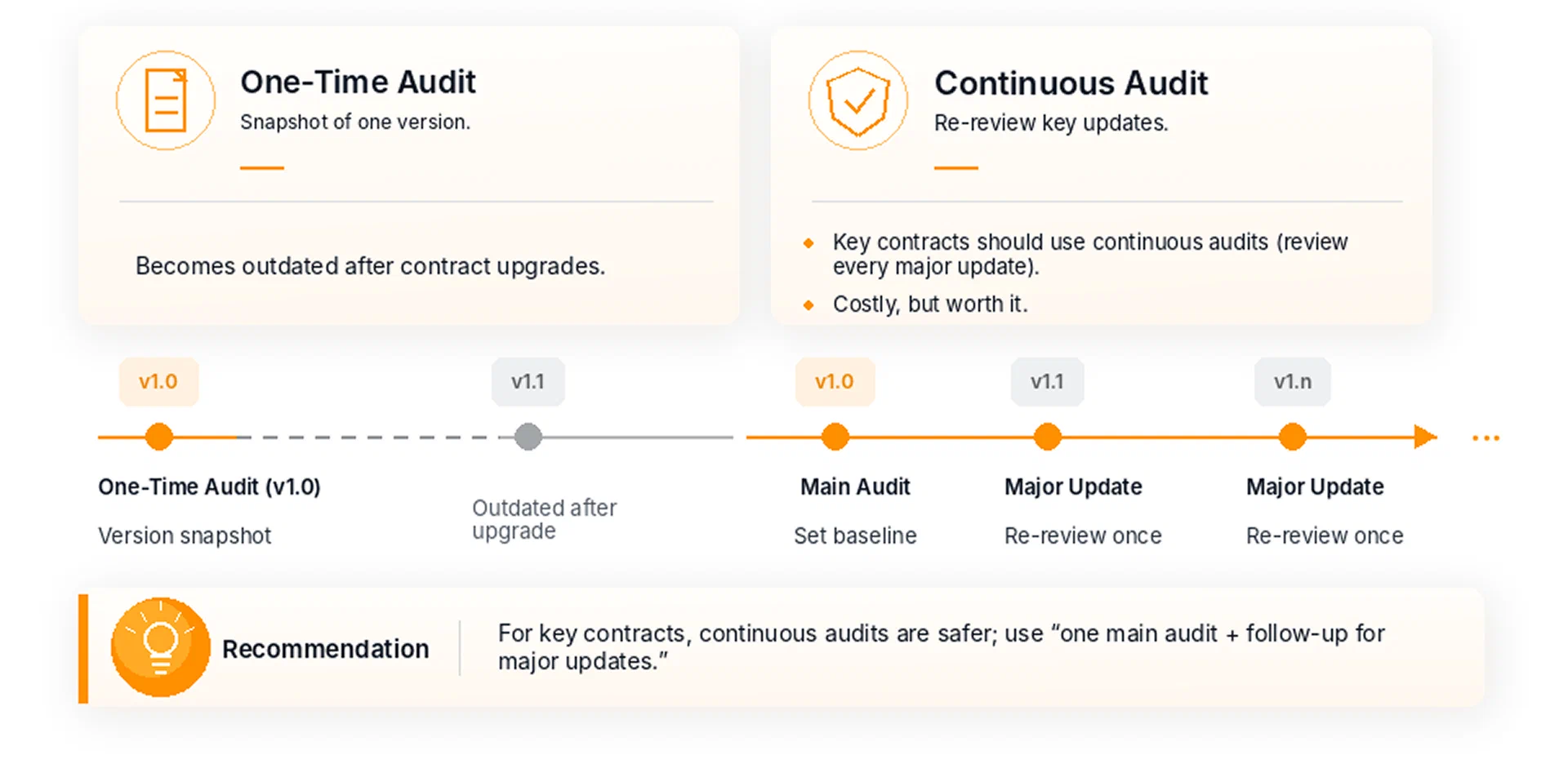
A single audit is a snapshot of a certain version; the contract becomes invalid after subsequent upgrades. Key contracts are recommended to undergo continuous audits (every important update is reviewed), which is costly but worthwhile. You can also do a main audit + major update additions at once.
5. Bug Bounty is a supplement to auditing
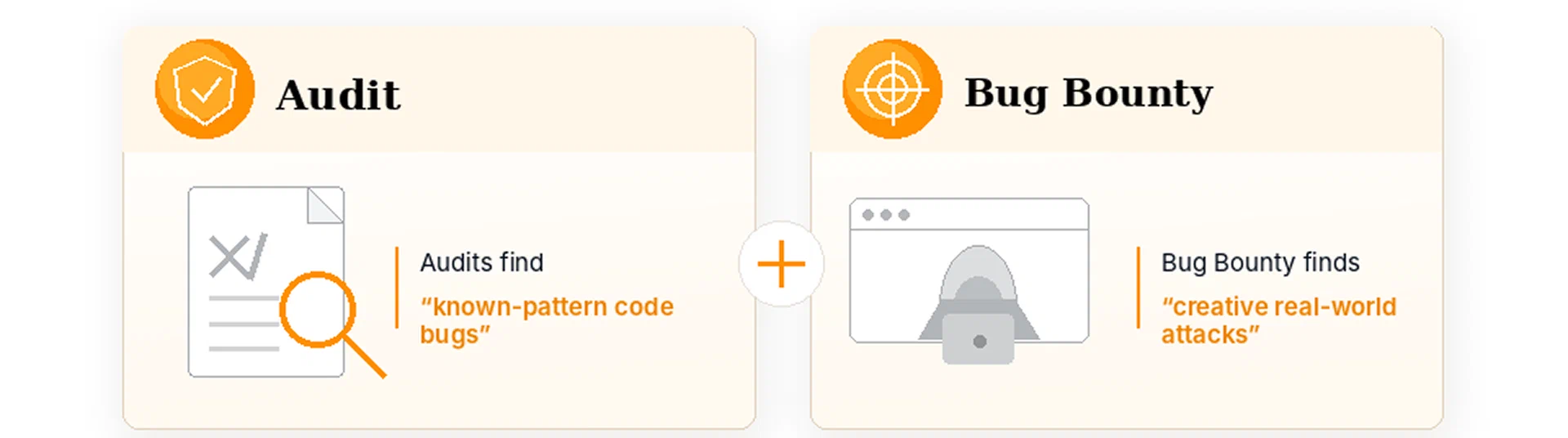
Bug Bounty platforms like Audit + Immunefi are standard. Audits identify "known pattern vulnerabilities in the code," while Bug Bounty identifies "real-world creative attacks." Only when the two are combined can you approach complete coverage.