1. Lookahead Bias
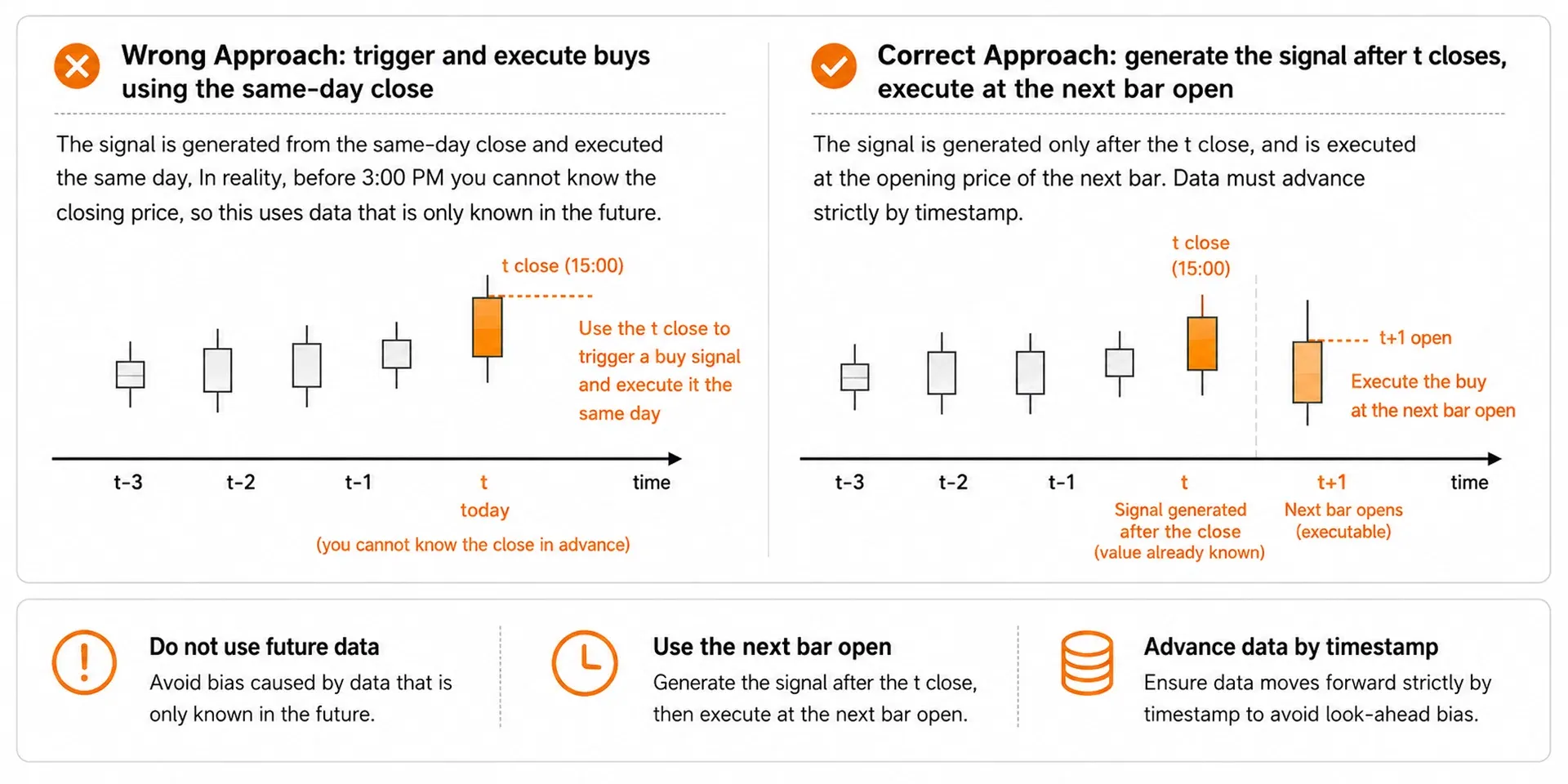
The strategy unexpectedly uses "data that will only be known in the future." The most classic is triggering a buy signal with the day's closing price—in reality, you can't know the closing price at 3 p.m.
It is recommended to execute at the opening price of the Next Bar, and data access must strictly follow the timestamp.
2. Insufficient estimation of slippage and fees
In backtesting, assuming "immediate execution at current price," the live trading requires reaching the counterparty, considering depth, and deducting fees. Slippage in small-cap coins can easily swallow all the gains of a strategy.
It is recommended to add at least 0.3% slippage + actual fees in backtesting.
3. Survivorship Bias
Using historical data from coins still active today, backtesting will automatically exclude coins that have been delisted or reset to zero. In actual investment, you never know which one will go to zero. This bias gives backtest results a systemic bias.
Solution: Use "complete historical data" containing delisted coins to bear higher data costs.
4. Overfitting
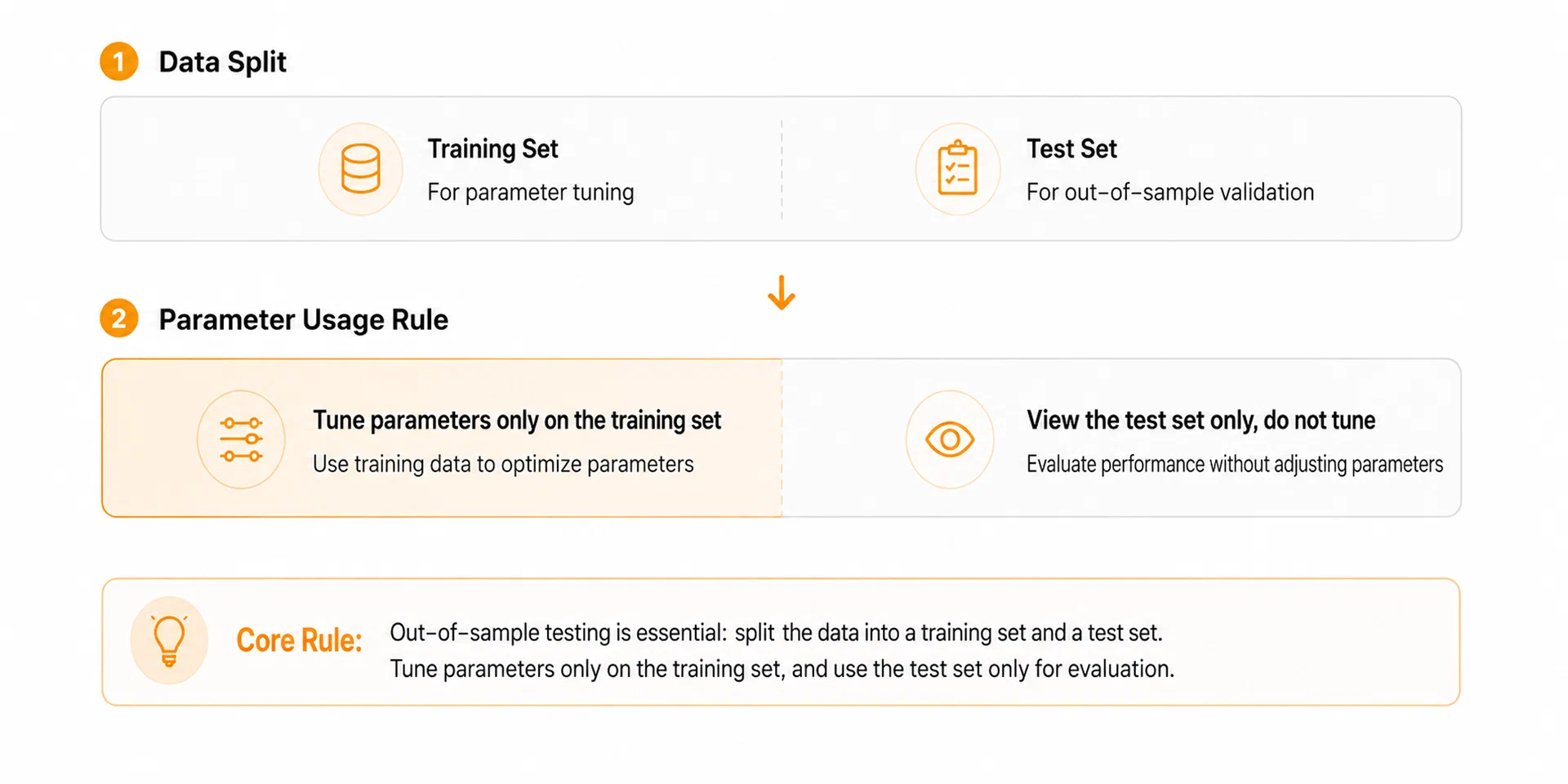
The strategy is maximized based on historical data, with parameters highly dependent on market characteristics over a certain period.
Out-of-sample testing is essential: divide the data into training and test sets, adjust parameters upward on the training set, and only adjust the test set without adjusting it.
5. Backtesting and live code paths are inconsistent
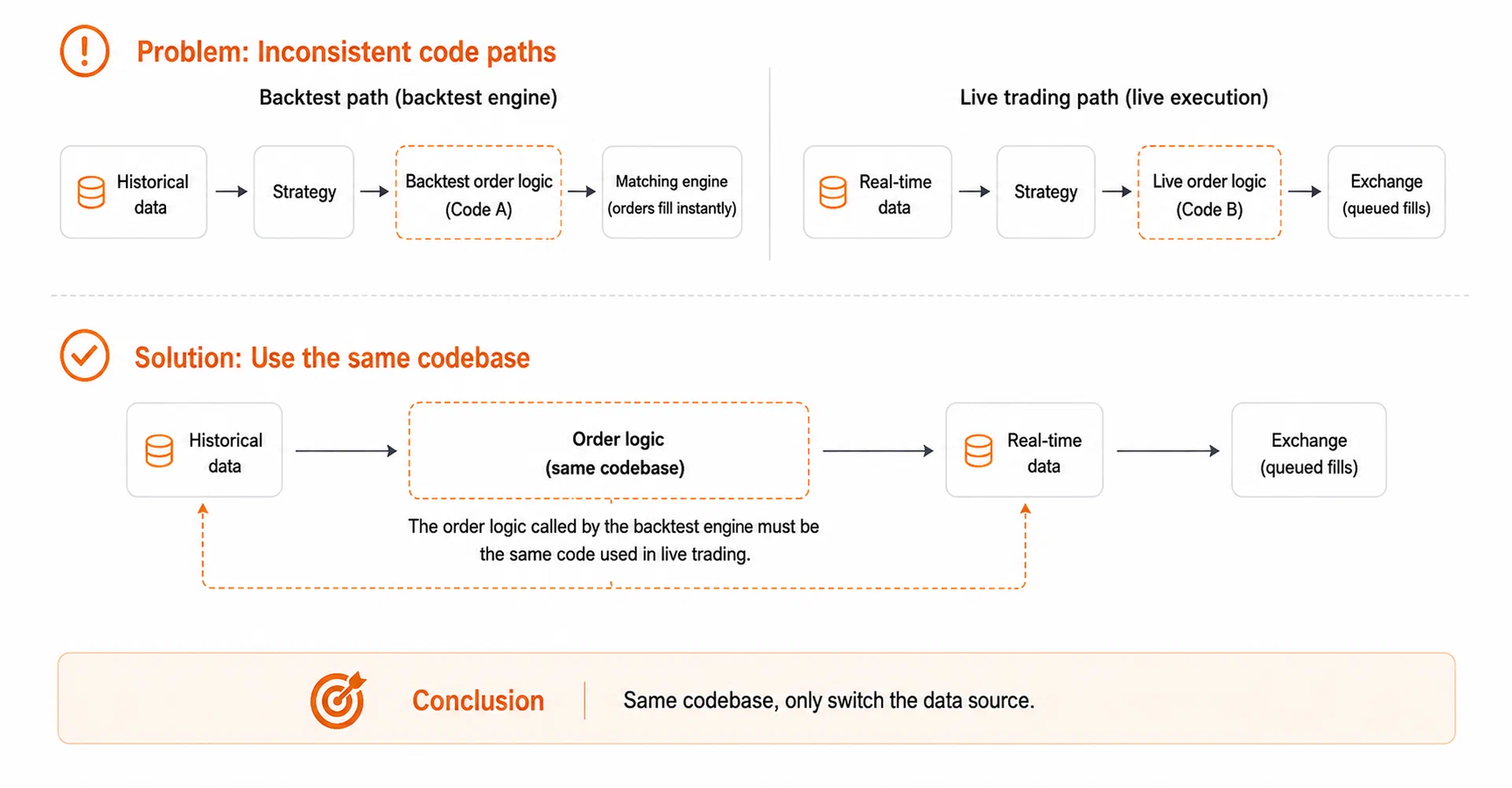
This is the deadliest and most concealed. The backtest engine and live trading execution use different codes; in backtesting, "order placed immediately executed" requires queueing in live trading.
Solution: The order logic used by the backtest engine must be the same code as the real market, except the data source is changed to historical data.