1. Four variables that determine costs
The cost and time of a public chain project are mainly determined by these four factors:
- 1.Consensus Mechanism:Whether to use a mature solution or self-developed customization makes a huge difference
- 2.Performance Objectives:TPS, block time, finality, and other requirements
- 3.Supporting facilities:Whether browsers, cross-chain bridges, node tools, and SDKs are required
- 4.Security and Operations:Auditing, monitoring, and upgrading mechanisms, with long-term investment
In the market prediction, oracles and dispute mechanisms are not "functions," but "the product itself." Make it the core of it.
2. Selection of consensus mechanisms
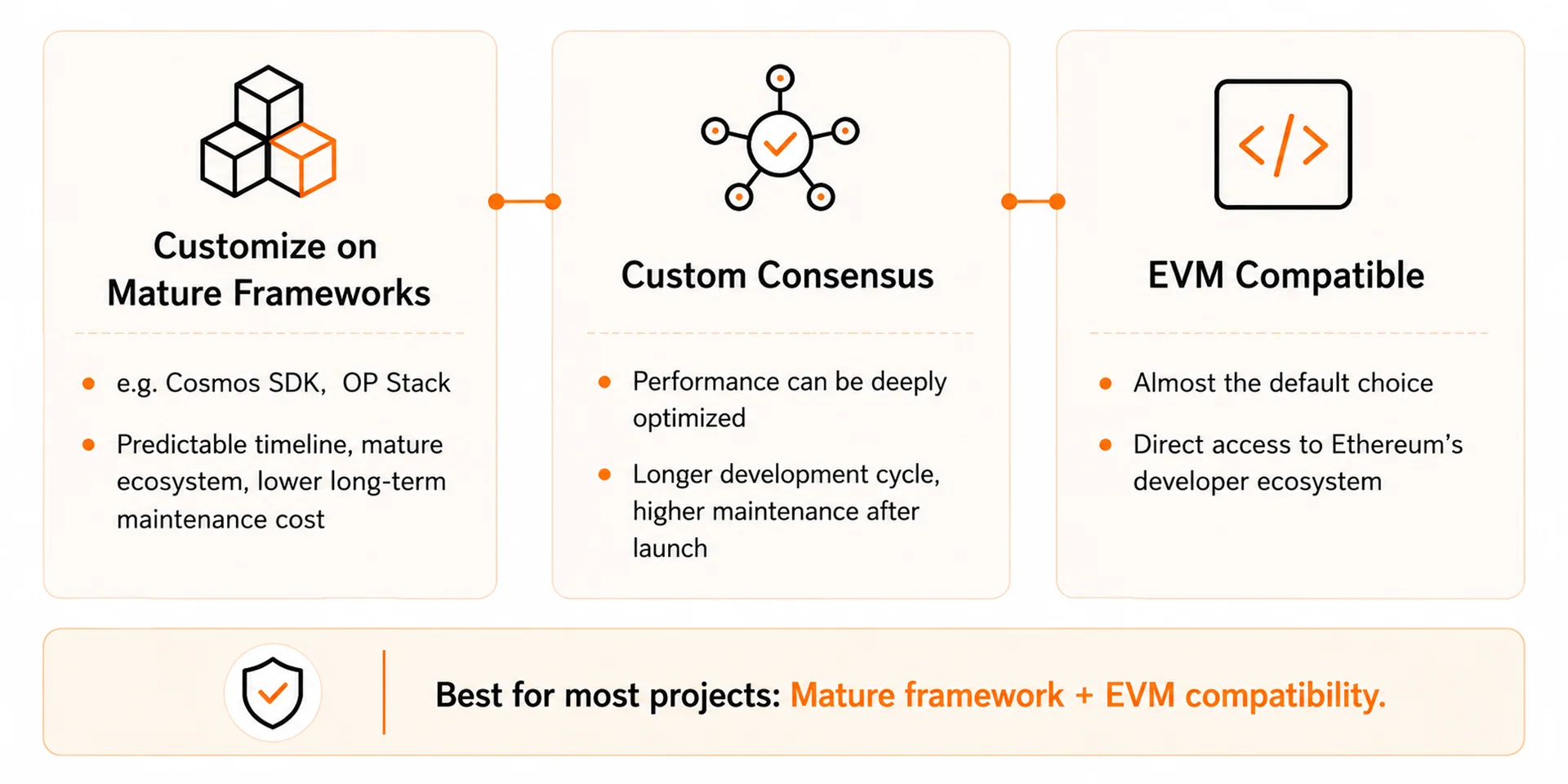
Customized based on mature frameworks (such as Cosmos SDK, OP Stack): controllable cycle, mature ecosystem, low long-term maintenance costs. Suitable for most projects.
Custom consensus: Performance can be optimized to the extreme, but development cycles are long and maintenance thresholds are high after launch. Unless you have strong scenario needs, it's not recommended.
EVM compatibility: almost the default option—directly inheriting the Ethereum developer ecosystem.
3. Supporting Facilities
This is the most easily underestimated part. The chain itself running is only the first step; without the following supporting measures, the chain is essentially useless:
- 1.Block explorer: The foundation for users and developers to verify transactions
- 2.Node deployment tools: lowering the threshold for operating nodes
- 3.Cross-chain bridges: How chains connect to external ecosystems
- 4.Developer documentation and SDK: attract developers to build applications
These packages are usually delivered simultaneously with the chain itself; otherwise, they need to be supplemented after launch, doubling the time cost.
4. Team Commitment and Time
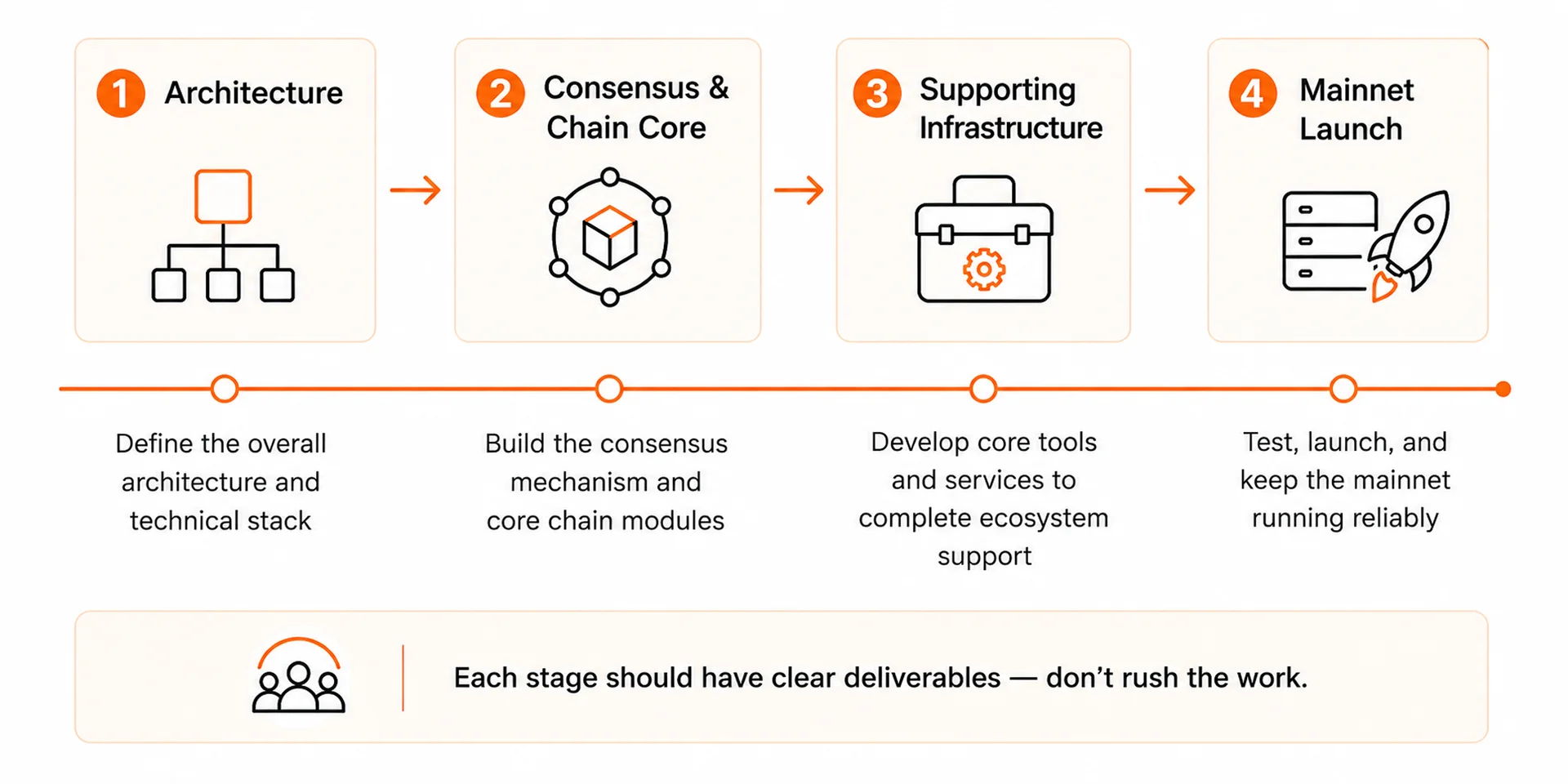
A single EVM-compatible public chain + complete support usually requires several months of dedicated dedication from a senior team. Customized consensus or new virtual opportunities are significantly extended. The key is not "speed," but rhythm: architecture → consensus and chain core → supporting facilities → mainnet deployment. Each stage has clear deliverables; don't rush work.
5. Methods for estimating your budget
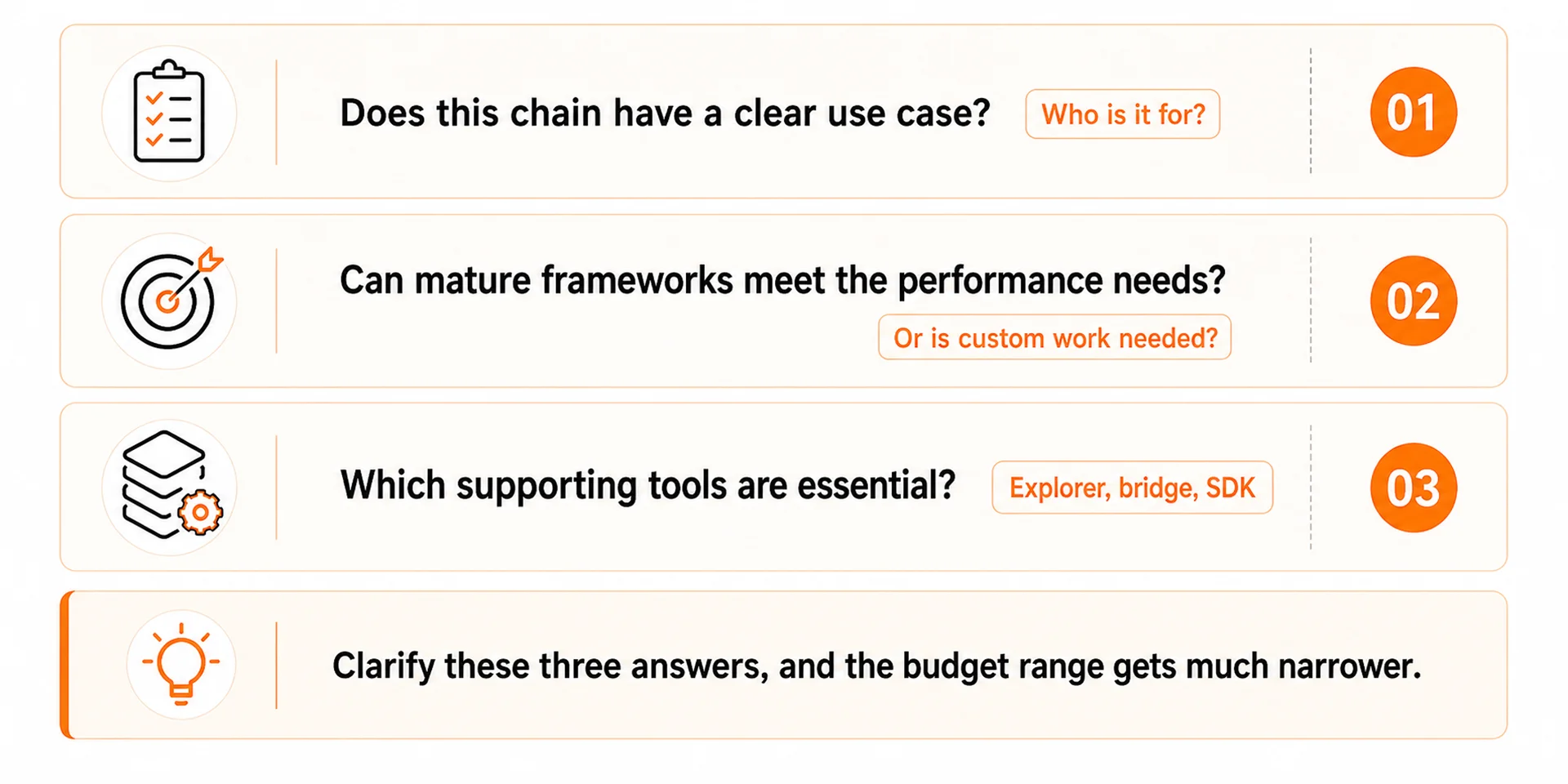
Ask yourself three questions:
- 1.Does this chain have clear application scenarios? Who is it for?
- 2.Can performance requirements be met with mature frameworks, or do they need customization?
- 3.List of supporting facilities — which browser, bridge, and SDK are required?
By clarifying these three answers, the budget scope narrows down. The safest way is to communicate the requirements to the team that has done so they can give a tailored assessment.