1. Quotation Traps
Tactic: Quote an absurdly low total price, such as "Exchange 100,000." After signing the contract, halfway through development: "This feature isn't written in the contract; additional fees will be charged." "The project team is caught in a dilemma—continuing to be ripped off, stopping early investments to go down the drain.
- 1.Is the quotation divided into modules?If the integrated quotation is not itemized, there will definitely be problems
- 2.Is the "scope of demand" in the contract clear?Vague descriptions are a hint for later additional fees
- 3.Compare the quotes from three companies.If the lowest price is too different, it's most likely a scheme price
True custom blockchain development is not cheap. Seeing a quote like "50,000 for a full exchange," I turned and left—not to save money, but to save time.
2. Unclear source code ownership
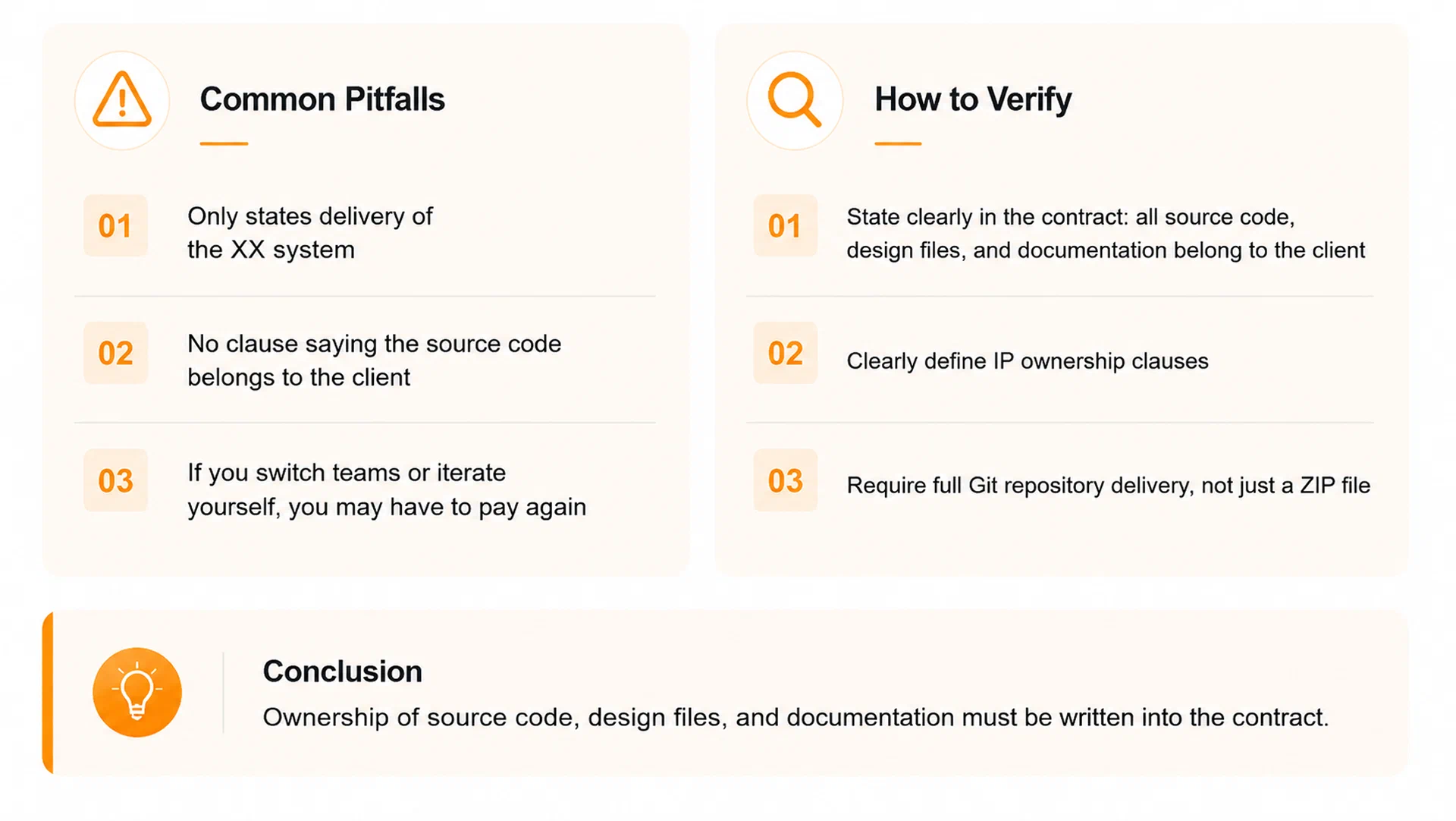
Trick: The contract only states "Development deliverables are XX system," not "The source code belongs to Party A." After launch, I wanted to change teams and iterate on my own, but found the source code wouldn't be provided—redoing it would cost double the cost.
- 1.The contract must clearly state:"All source code, design drafts, and documents belong to Party A"
- 2."Intellectual property ownership" clauseWrite it clearly
- 3.Confirm during acceptanceA complete Git repository, not just a zip package
3. Running away after launch
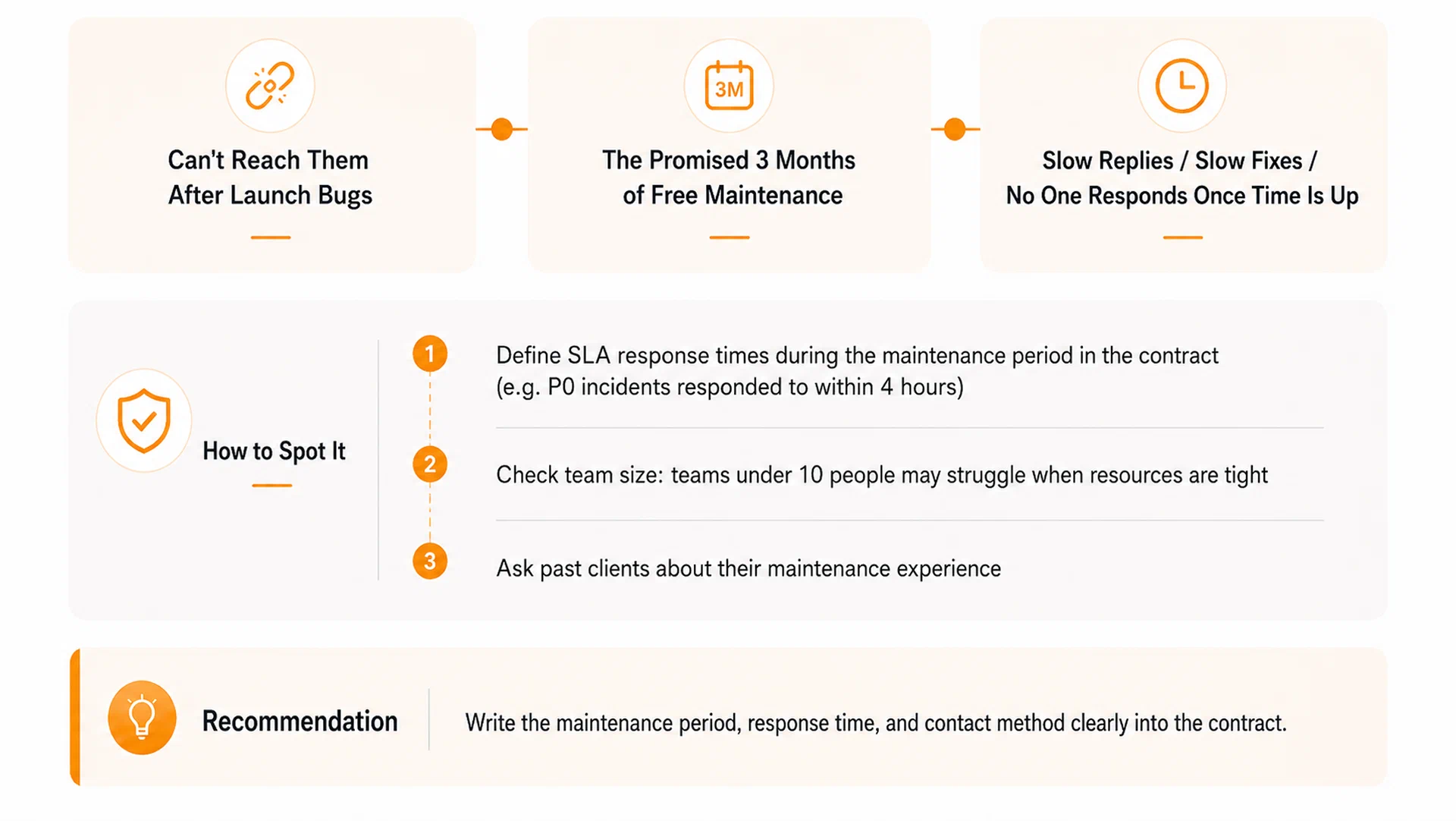
Tactic: After launch, the project team encounters a bug and can't be reached, so they have to pay extra to fix it. The originally promised "3-month free maintenance" was delayed in communication and repairs, and when the time came, no one responded.
- 1.The contract clearly states that the maintenance period is within the periodResponse Time SLA (e.g., 4-hour response for P0 fault)
- 2.Looking at team size—Small teams with fewer than 10 people are prone to falling short when resources are tight
- 3.Look at past deliveriesReal contact information, chat with old customers about maintenance experiences
4. How to identify reliable teams
Simple criteria:
- 1.See real delivery cases:Can you provide projects you have actually done? (Desensitization is fine, but it must be verifiable)
- 2.Technical communication:Can a 30-minute conversation clarify the architecture? Those who only talk slogans and ignore details are bound to be trapped
- 3.See contract details:Reliable team contracts clearly state requirements, delivery, source code, and maintenance
- 4.Checking the payment schedule:Phased payments (30% for initiation / 40% for mid-term / 30% for acceptance) are normal; If you want to pay in full at once, run
There is no silver bullet in blockchain outsourcing. But if you filter with these criteria, the chances of getting ripped off will drop significantly.