1. Fundamental differences in technical principles
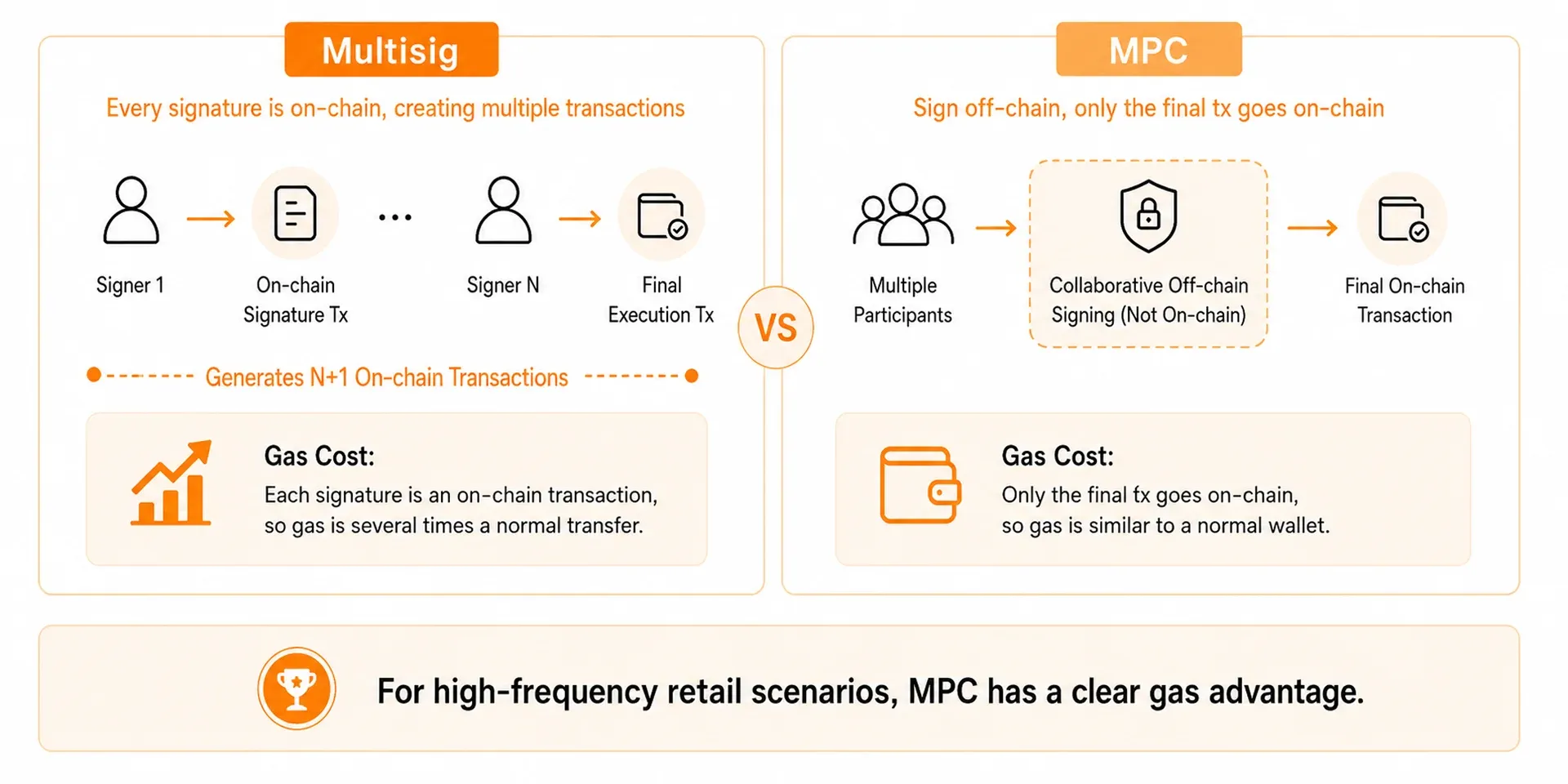
Multisig completes the signing process on-chain—multiple private key signatures are all on-chain transactions and require contracts. MPC places signatures off-chain and uses the threshold signature algorithm (TSS) to synthesize a standard signature, making it appear as a regular wallet on-chain.
This difference determines all other differences: gas costs, chain compatibility, privacy, and experience—all derived from "on-chain vs. off-chain."
2. Gas cost
Each multisig signature is an on-chain transaction, and the gas cost is several times that of a regular transfer. MPC completes the signature off-chain, only the final transaction is completed on-chain, and gas is the same as in a regular wallet. For high-frequency use on the C side, MPC offers a significant gas advantage.
3. Chain compatibility
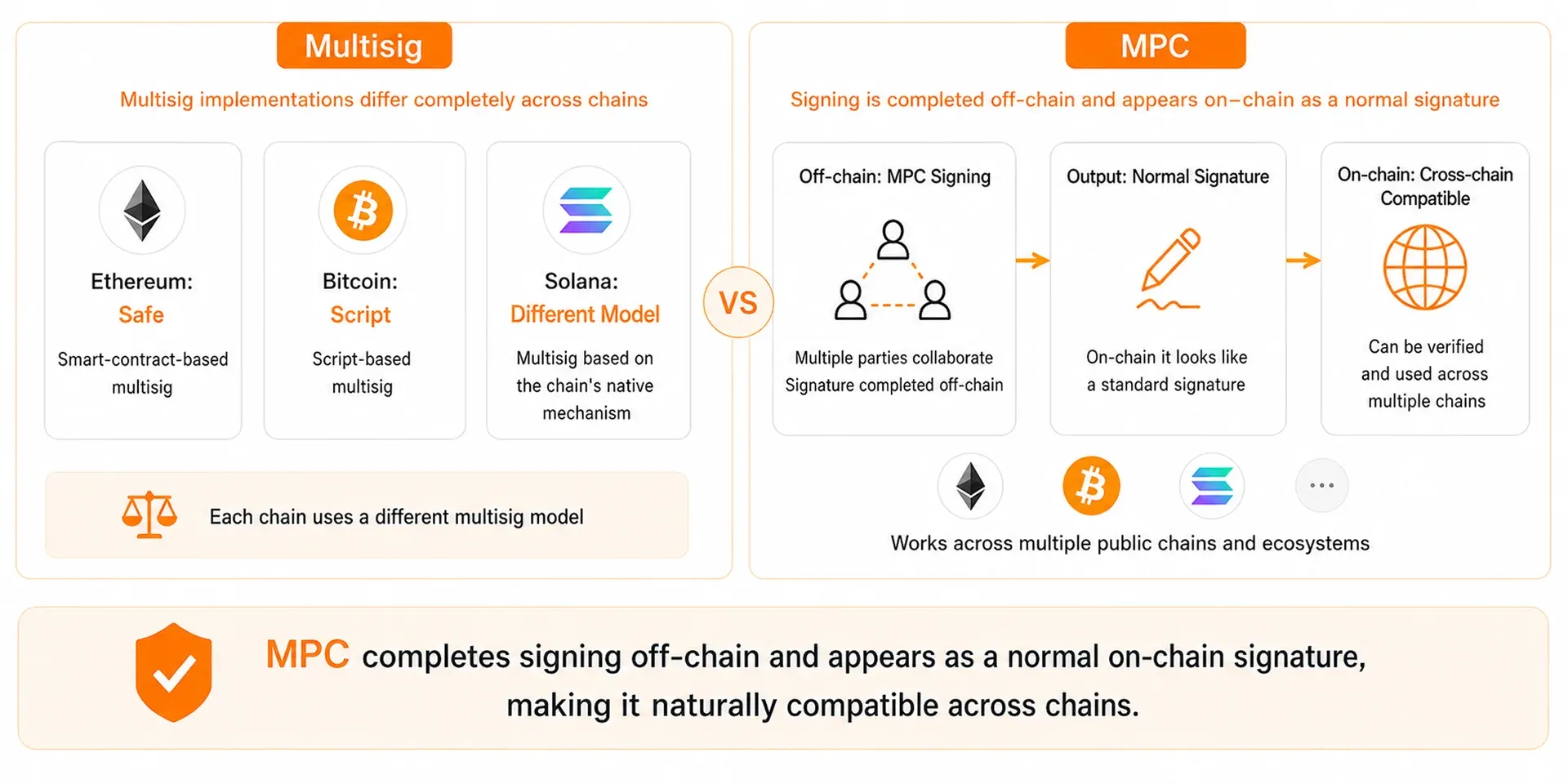
Multisig depends on the target chain supporting multisig contracts, and multisig implementations vary completely across chains (Ethereum uses Safe, Bitcoin uses scripting, Solana is a different one). MPC is completed off-chain and is just a regular signature for the chain, naturally compatible with multiple chains.
4. Applicable Scenarios
- 1.Scenarios for selecting multiple signatures:Enterprise/institutional fund management requires transparent and traceable approval processes, with all signature actions recorded on-chain.
- 2.Scenarios for choosing MPC:C-end wallets focus on experience and gas costs; Multi-chain wallets require unified signature logic; Key sharding is needed across different devices/services.
5. Don't view them as opposing things
In actual projects, the two are often used together: MPC for managing hot wallets (better experience, less gas), and multisig for cold wallets (transparent and auditable). This is the most stable solution.