1. The Core Difference Is "Secure Inheritance"
Layer 2 (Rollup) inherits the security of the mainnet (such as Ethereum)—data is uploaded to the mainnet, and disputes are arbitrated on the mainnet. Sidechains have independent consensus and validator sets, ensuring complete security independence. Application chains go a step further: they are dedicated to a specific application, which can leverage shared security with Cosmos/Polkadot or be completely independent.
"Inheriting mainnet security" is the most valuable aspect of Rollups. This means that even if all Rollup validators commit malicious acts, user assets can still be reclaimed via the mainnet.
2. Performance and Cost
Rollups are affected by the mainnet, and every state submission requires payment of mainnet gas. The sidechain is completely independent, and its performance depends on its own consensus. App chains can be optimized to the extreme for a single application—this is their greatest appeal.
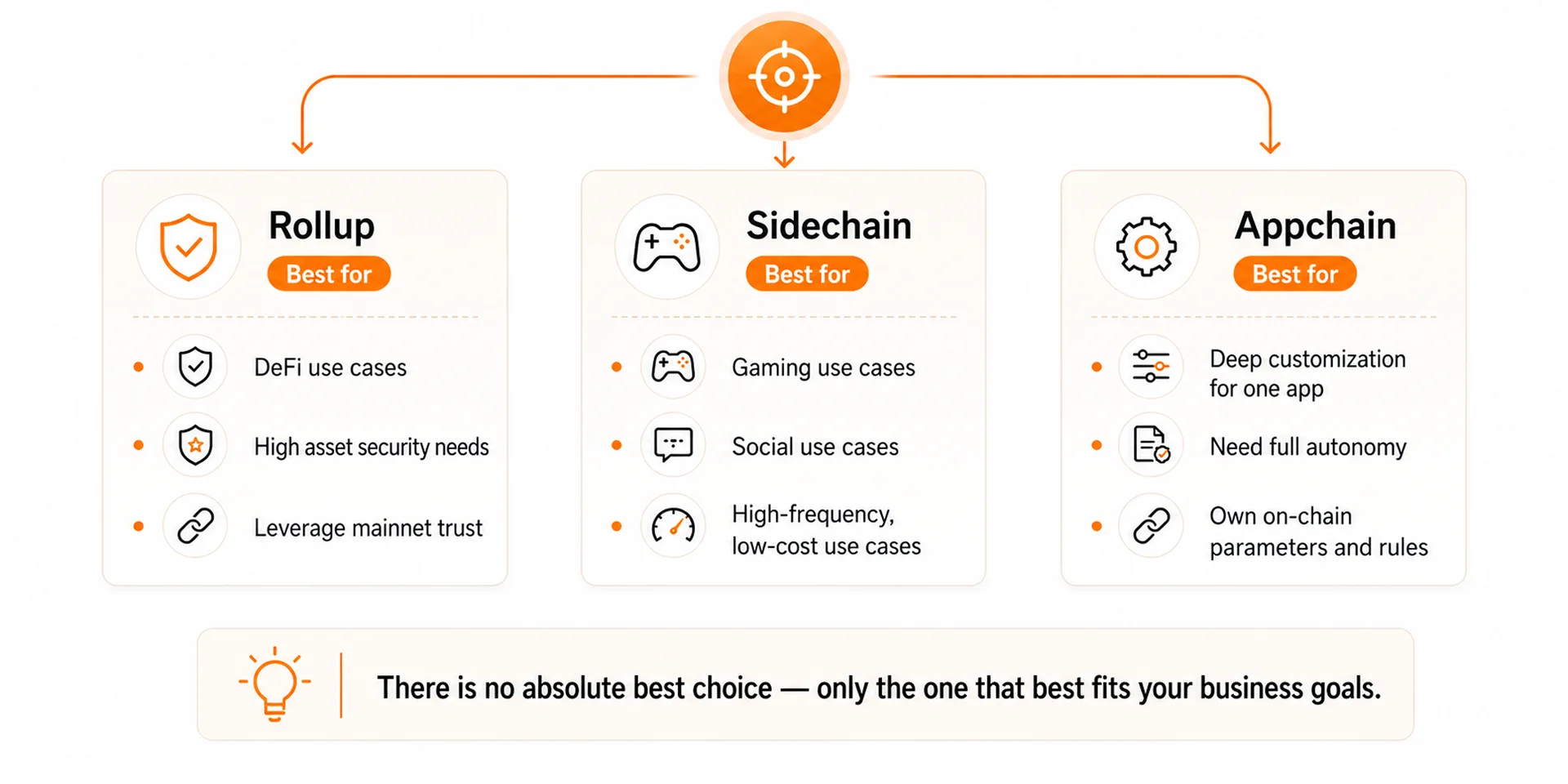
3. When to choose whom
- 1.Choose Rollup: DeFi projects require highly secure inheritance of assets; Users expect seamless bridging to the mainnet
- 2.Choose sidechains: Scenarios sensitive to cost or less secure in gaming, social networking, and other scenarios
- 3.Select an app chain: A single application has sufficient traffic and requires fully autonomous on-chain parameters
4. Differences in ecological maturity
The rollup ecosystem is the most mature, with OP Stack, Arbitrum Orbit, and zkSync Hyperchains all able to quickly launch new chains. Sidechain toolchains are relatively fragmented. Application chains (Cosmos SDK, Polkadot Substrate) require more engineering investment.
5. Decision Checklist
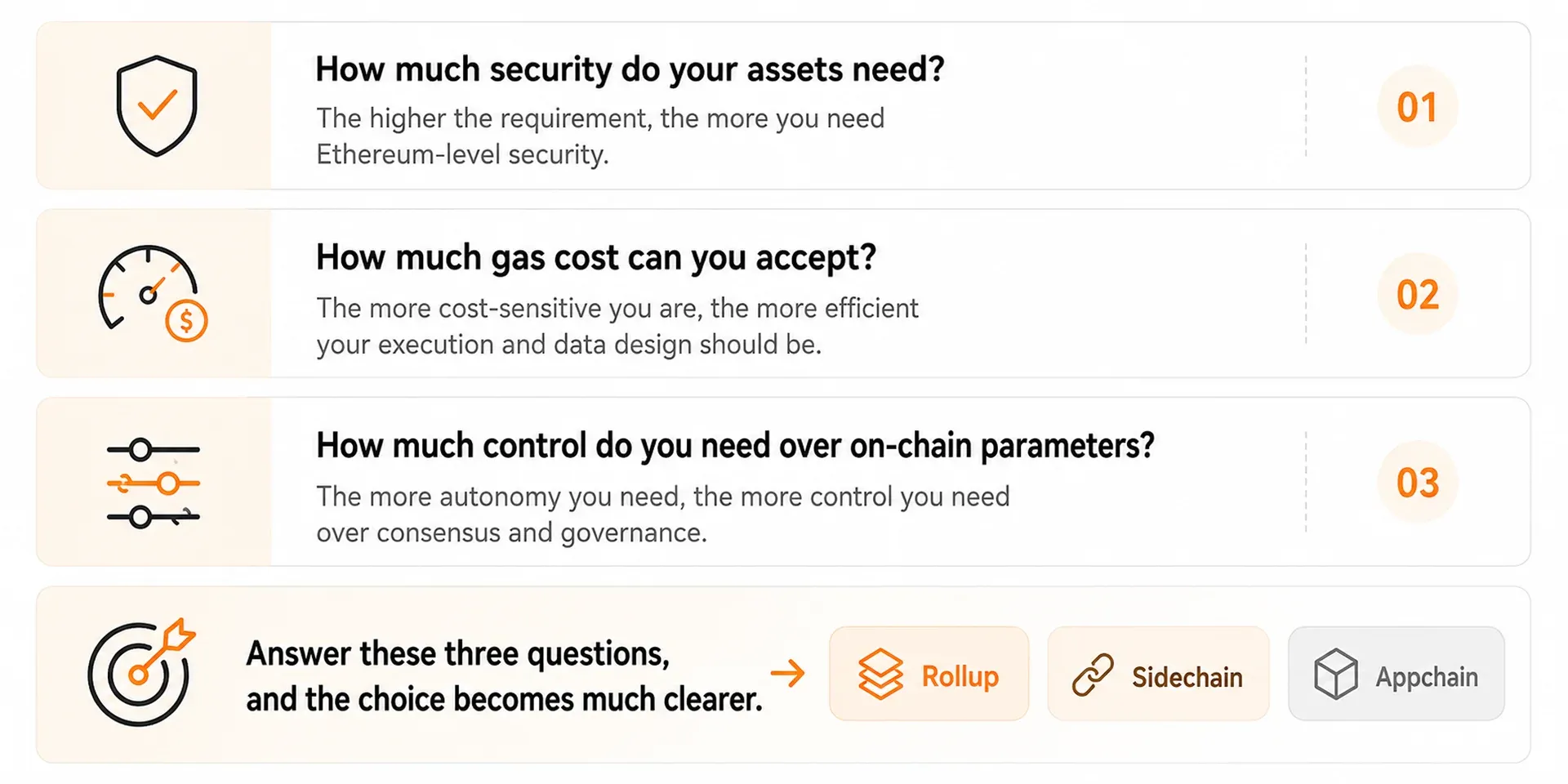
Three questions will help you set your answers. After answering these three, the answer is basically clear.
- 1.How high are asset security level requirements?
- 2.What gas costs can you accept?
- 3.How much on-chain argument autonomy is required?