1. Core: Matching Engine
The matchmaking engine is the heart of the exchange. Its core tasks are twofold: receiving orders and maintaining the order book. At each price tier, orders are arranged according to the "price priority, time priority" rule. When a buyer places an offer ≥ a seller asks, the deal is automatically triggered.
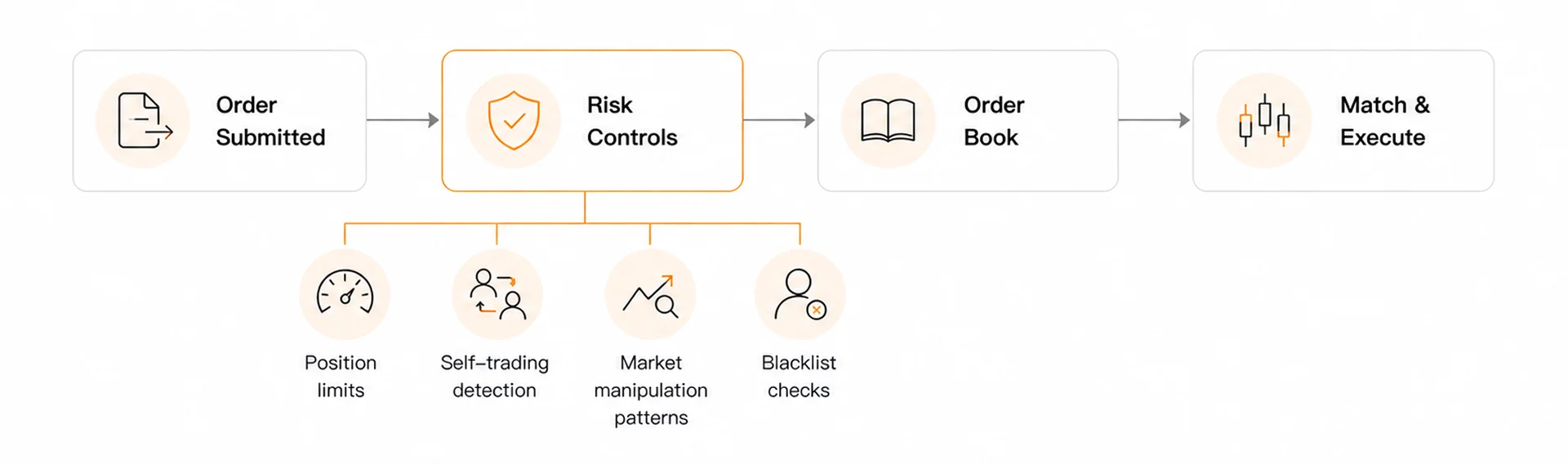
If you need to embed custom risk control rules in the matching layer (which most regulated or specialized exchanges do), then develop it in-house. Post-event risk control can never compare to embedded risk control.
2. Risk control is not optional
Risk control is rooted in the order chain. It must be intercepted before bad orders are booked, not afterward. This includes position limits, self-trading checks, market manipulation patterns, and blacklist checks. Real-time risk assessment must run with single-digit millisecond delays, or your engine becomes a bottleneck.
3. Clearing, Settlement, and Custody
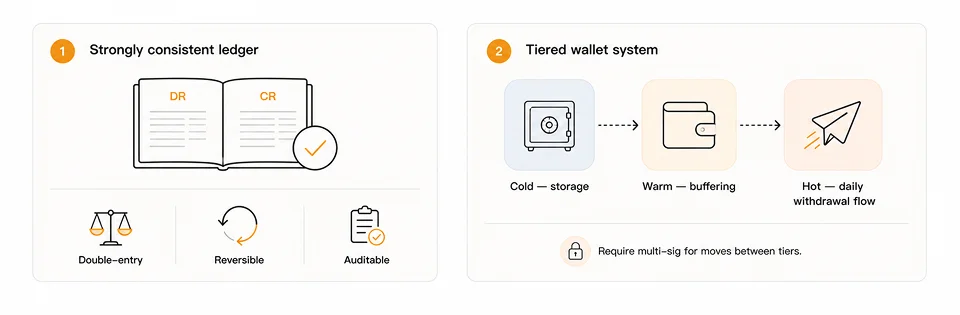
User balance ledgers must be strictly consistent. Using double-entry bookkeeping principles, every transaction is reversible and auditable. Inconsistency is how exchanges lose money—and lose customers. Custody is a layered wallet system: cold storage, hot buffering, and daily withdrawal flow. Automated rebalancing, but moving between levels requires multi-signature.
4. Compliance Layer
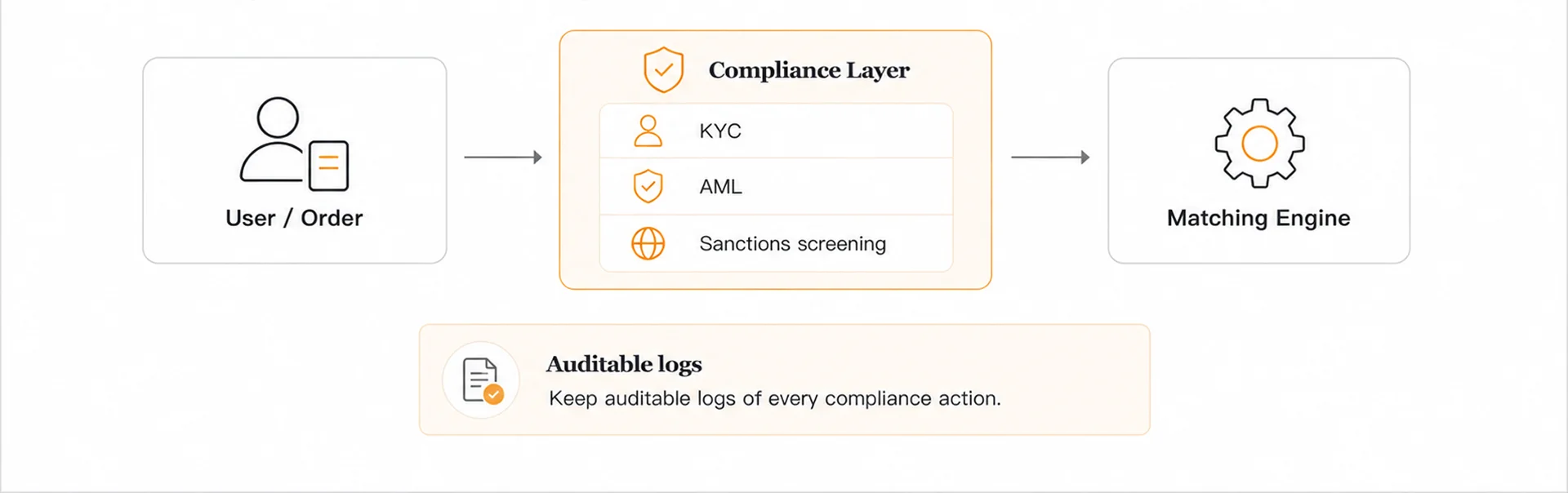
KYC, AML, and sanctions screening are non-negotiable in most markets. Integrate them as a bypass layer—orders are evaluated before entering matchmaking, so compliance never slows down the transaction path. Maintain audit logs for every compliance operation. Regulators will come to ask.
5. Common Traps
- 1.Skipping the stress test:The flow in the production environment is completely different from the testing environment
- 2.Further risk control supplements later:It can never be fully patched, and users will find loopholes
- 3.Underestimation Clearing Settlement Complexity:Multi-asset settlement is much harder than it seems
- 4.Overlooking multi-regional needs:Global traders are highly sensitive to delays
Building an exchange is difficult, but not every wheel has to be built yourself. Invest in custom development where you truly differentiate: rules, risk control, and user experience.