1. Core issues of forced liquidation
The core of forced liquidation is "timely closing positions when users lack margin to avoid being cut into positions." It sounds simple, but the difficulty lies in three things:
- 1.When will it trigger—How is the margin rate calculated, and where is the threshold?
- 2.How to Level—Market orders vs. limit orders vs. takeover closing positions
- 3.Can it still survive in extreme market conditions—What if the market has no counterparties?
2. Margin Calculation
Real-time margin rates must be updated millisecond-level. Two mainstream models:
- 1.Cross margin:All positions in the account share margin, flexible but risk-shared
- 2.Isolated margin:Each position has independent margin, isolating bankruptcy but with low capital utilization
Most exchanges support it simultaneously, allowing users to choose freely.
Real-time margin calculation relies on the latest mark price. The choice of marking price directly affects the fairness of forced liquidation—using the latest transaction price of the exchange is easily triggered by malicious manipulation, and most exchanges use multi-source weighted index prices.
3. Trigger conditions
Common designs:
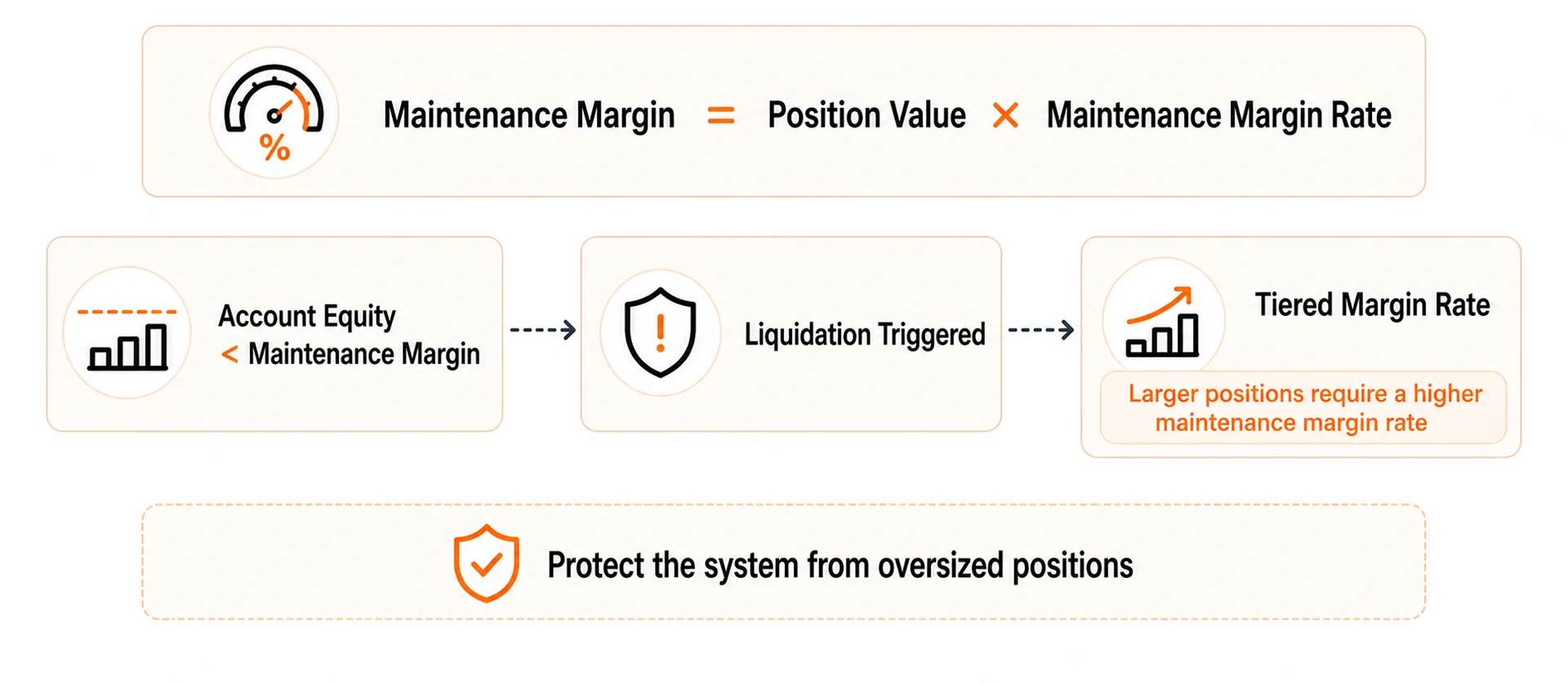
- 1.Maintenance margin rate = Position Value × Maintenance Margin Rate
- 2.Account Equity < Maintenance margin → Forced liquidation triggered
- 3.Tiered Margin Rates:The larger the position, the higher the maintenance margin ratio (to prevent major players from dragging down the system)
4. Execution Priorities
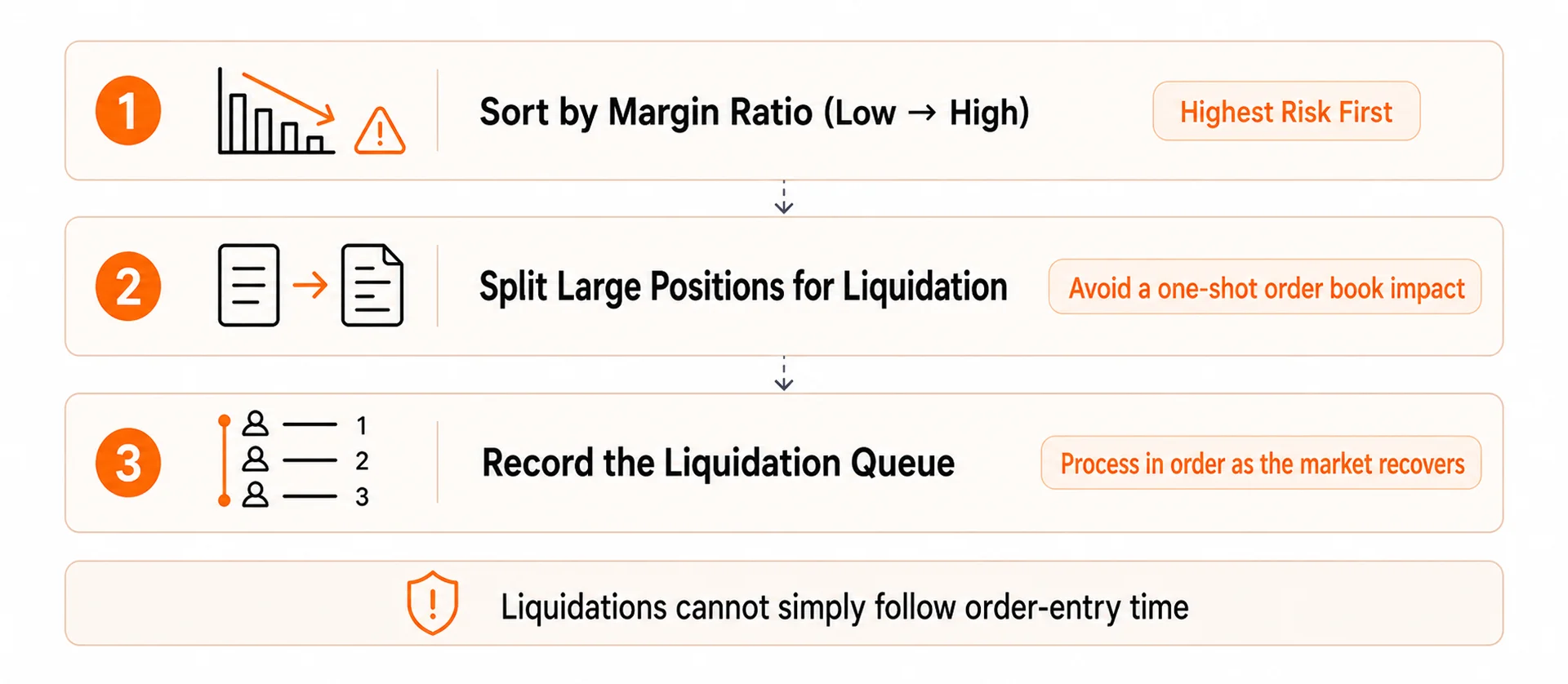
Forced liquidation cannot simply be executed in the order of orders. Close out risky positions first to avoid chain liquidation. Common strategies:
- 1.Ranked by margin rate from low to high (the most dangerous ones close first)
- 2.Large positions are split and closed to avoid a single shock to the order book
- 3.Record liquidation queues and process them sequentially when market conditions resume
5. Do not be forced to enter positions in extreme market conditions
When the market crashes, competitors disappear, and forced liquidation orders cannot be held, forced liquidation losses may occur. Countermeasures:
- 1.Automatic Reduction Mechanism (ADL):Counterparties are ranked by profit + leverage and are forced to close out part of their positions
- 2.Insurance Fund:Accumulate fees as a risk reserve to absorb losses from losses from losses
- 3.Gradual Liquidation:Close the worst positions first to avoid liquidating all positions at once
This mechanism sounds complicated, but in extreme market conditions, the difference is "user losses vs. platform fleeing." There are no easy shortcuts here.