I. Four Main Components of Cost
The development cost of a trading system is roughly determined by these four parts: functional scope, performance requirements, security level, and subsequent operation and maintenance. The first two parts determine the development volume, and the latter two parts determine the long-term investment.
- 1.Functional Scope:Whether it only deals with spot trading, or spot trading + contracts + quantitative trading + market making, the more modules there are, the greater the development volume. 2. Performance requirements vary greatly: Daily transaction volume determines the level of the matching engine, directly affecting architectural complexity. 3. Security level: Wallet layering, risk control, and auditing all incur costs, but cannot be omitted. 4. Operational support: Deployment is just the beginning; monitoring, emergency response, and iteration require continuous investment.
II. Matching Engine: Self-Developed vs. Off-the-shelf
The matching engine is the heart of an exchange and a cost dividing line. Mature engines can be launched quickly and at low cost, but are difficult to customize; self-developed matching engines are flexible and can be embedded in business rules, but require higher development investment.
Key judgment: Custom risk control or special matching rules need to be embedded in the matching layermatching layer. The long-term benefits of self-developed systems usually outweigh the initial cost savings. Conversely, for those with standardized requirements and a pursuit of rapid deployment, mature engines are more cost-effective.
III. Risk Control and Clearing/Settlement: Most Easily Underestimated
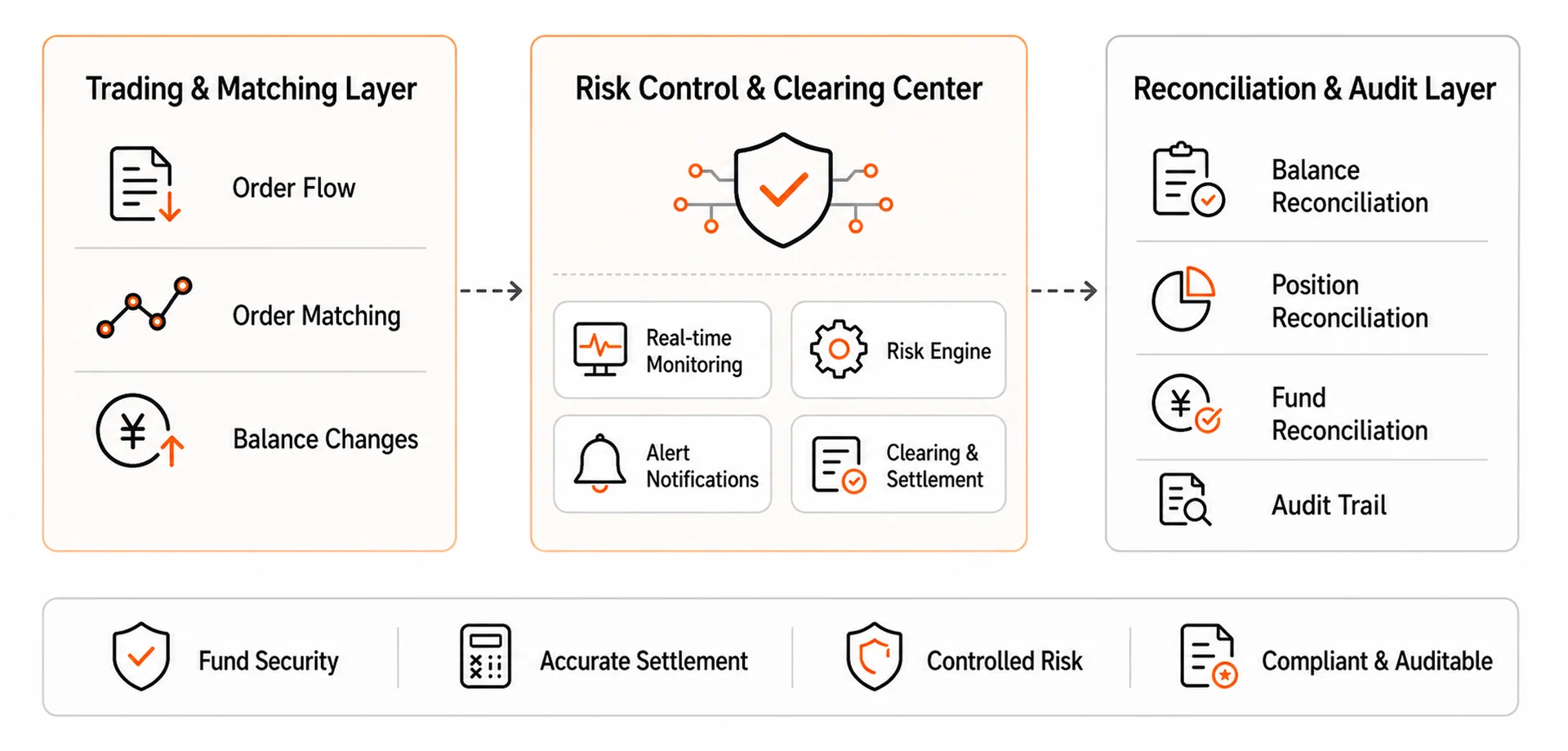
Many budgets only consider the "visible" trading interface and matching, but underestimate risk control and clearing/settlement. These two aspects are not directly faced by users, but they determine whether the platform will experience financial incidents. The financial ledger must be highly consistent and auditable; for leveraged contract systems, the liquidation engine must be stably triggered under extreme market conditions.
IV. Cycle and Team Investment
Cost and cycle are highly correlated. A pure spot trading system typically takes several months to deliver; a system combining spot trading, contracts, and complete risk control and settlement requires an even longer timeframe and greater team investment. Pushing the timeline too short often sacrifices testing and security, ultimately leading to higher costs after launch.
V. How to Estimate Your Budget
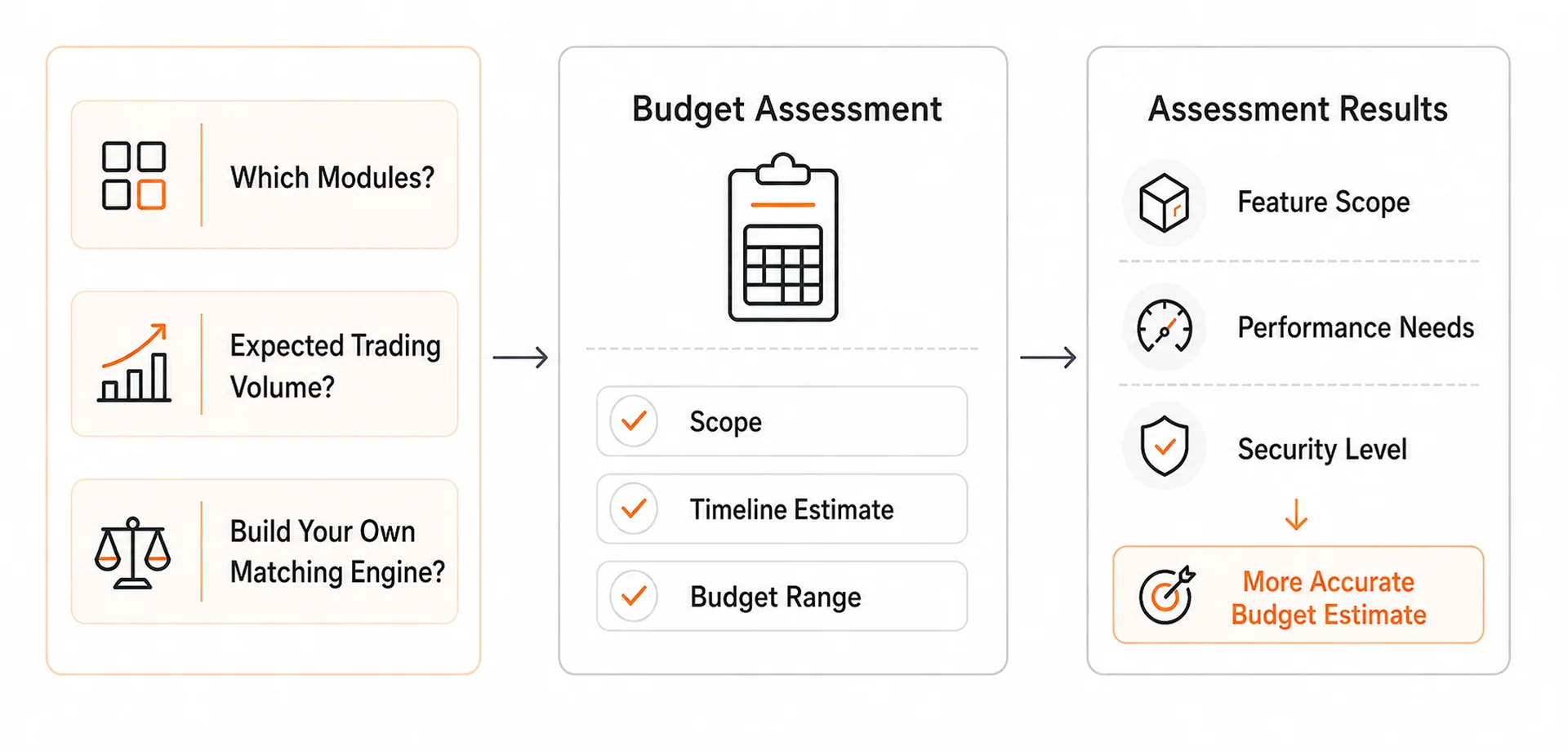
Instead of asking "How much does an exchange cost?", it's better to answer three questions first: Which modules are needed? What is the expected trading volume? Should we develop our own matching system? Once you've clarified these three points, your budget range will naturally narrow down. The fastest way is to explain your requirements to someone with experience in this area and get a suitable assessment.