1. Hosting model
The biggest cost driver. Three options:
- 1.Standard self-custody (mnemonic phrase):Lowest cost. There are mature libraries, with a focus on UX.
- 2.MPC (Multi-Party Computation):The cost is about 2-3 times higher. Cryptographic engineering and server-side infrastructure are required.
- 3.Multiple-entry visa:It requires smart contract development, auditing, and multi-chain deployment, which is significantly more costly.
MPC is winning the consumer market by eliminating mnemonic phrases. But the engineering threshold is much higher than the mnemonic wallet—don't choose MPC just because it sounds modern.
2. Chain coverage
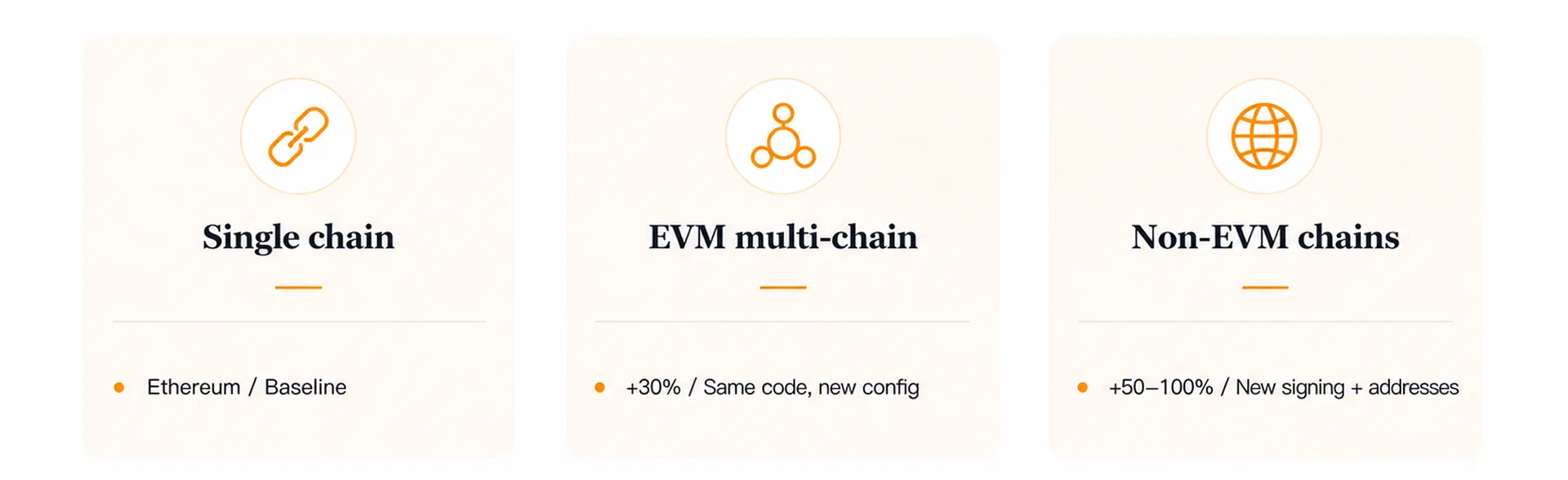
Each additional chain brings development and ongoing maintenance costs:
- 1.Single Chain (Ethereum):Baseline line
- 2.EVM supports multiple chains:+30% — Same code, different configuration
- 3.Non-EVM chains (Solana, Cosmos, Bitcoin, etc.):+50-100% per chain — different signature schemes and address formats
3. Platform selection
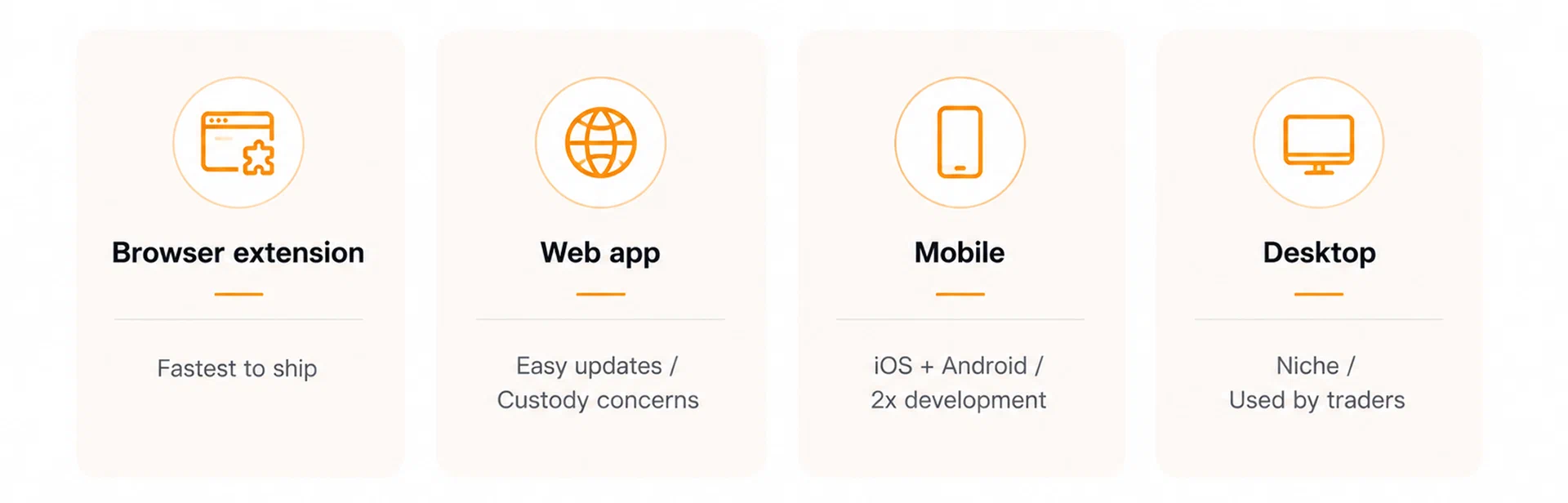
Where does the wallet run:
- 1.Browser Plugins:Fastest to launch
- 2.Web Applications:Updates are easier, but there are hosting concerns
- 3.Mobile (iOS + Android):Double the development volume, and still need to pass app store review
- 4.Desktop Side:Niche, but commonly used by traders
Cross-platform wallets have the highest costs—but also the largest user base. This is a trade-off.
4. Functional Range
Beyond basic sending and receiving:
- 1.DApp Browser:WalletConnect integration and DApp permission management
- 2.Swap integration:DEX aggregator or 0x/1inch API
- 3.NFT support:Display, transfer, metadata
- 4.Staking/Yield:Integrate each protocol one by one
- 5.Hardware Wallet Integration:Ledger and Trezor connection
- 6.Account abstraction:Gas-free transactions and social recovery
5. Common cost misconceptions
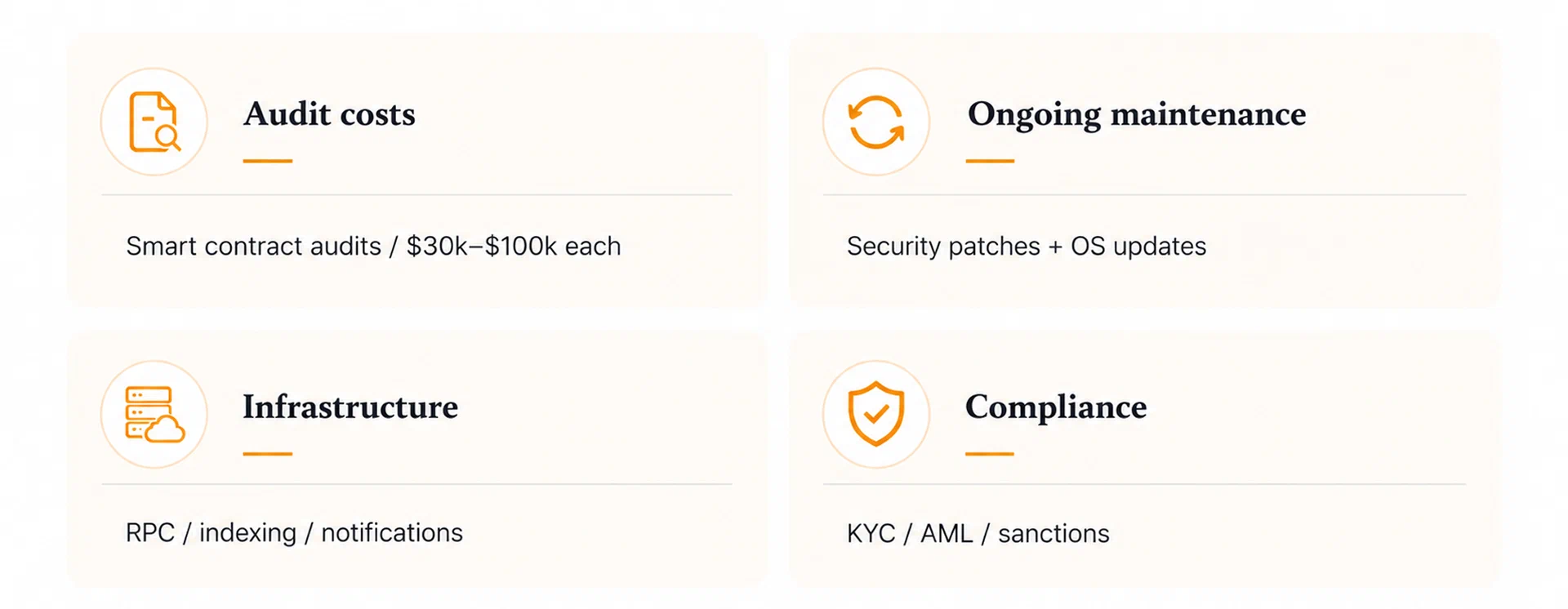
Underestimating audit costs: Smart contract wallets require professional audits, costing $30,000 to $100,000 each time.
Forget ongoing maintenance: new chain protocols, security patches, mobile OS updates—wallets require ongoing engineering investment, not one-time deliveries.
Ignoring infrastructure costs: RPC providers, indexing services, push notification servers—$1,000-10,000+ per month at scale.
Unbudgeted compliance costs: KYC, AML, sanctions screening—these are required in many jurisdictions.
The right question isn't "How much does it cost to make a wallet"—but rather, "Given these specific options, how much does my wallet cost?" "Think carefully about your choices first.