1. Validator intrusions
Many bridges use a small number of validators to confirm cross-chain messages. If attackers infiltrate most validators through key theft, social engineering, or internal access, they can mint assets out of thin air.
Defense: Use threshold signatures from widely distributed key holders, rather than multisig from a few operators. The harder it is for validator collections to be compromised, the more secure the bridge is.
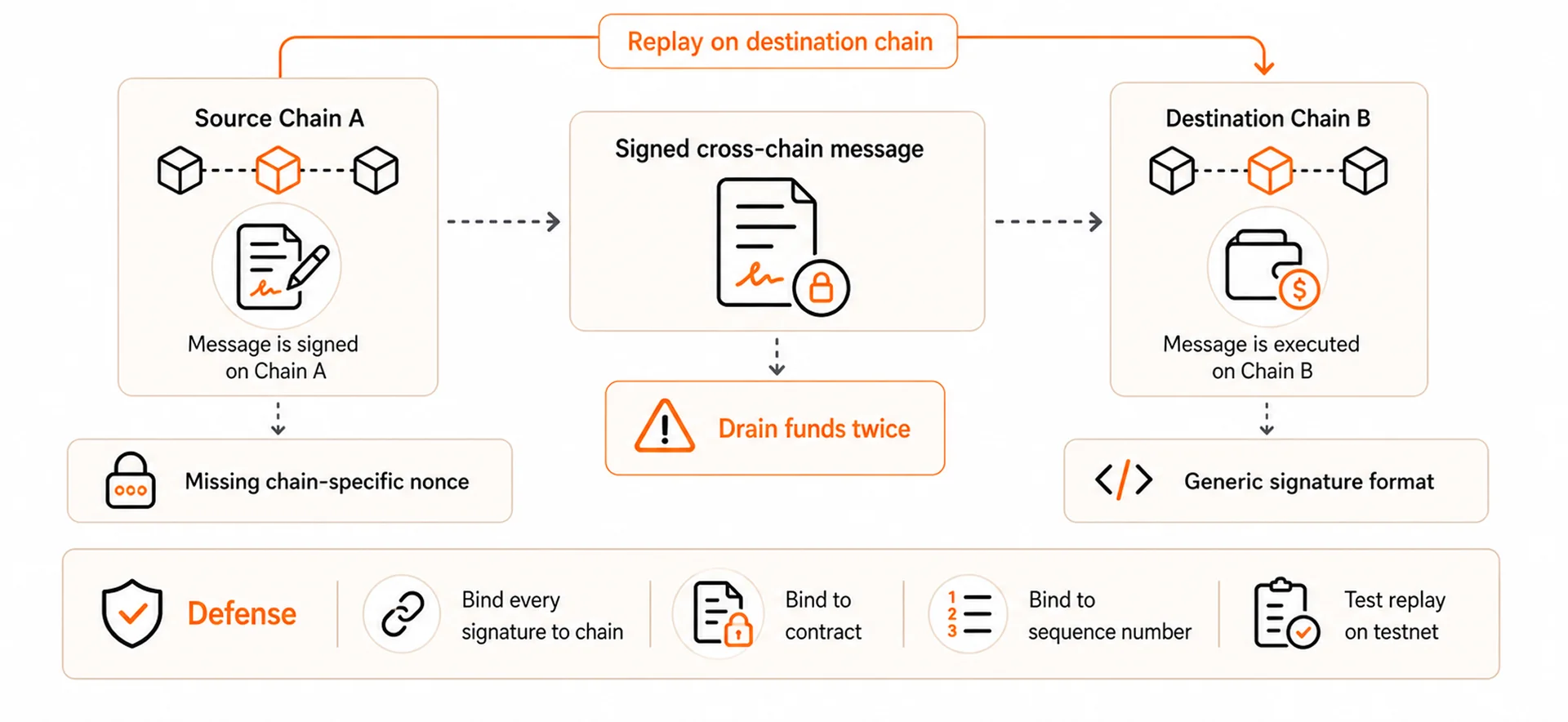
2. Signature replay
Signed cross-chain messages may be replayed on the target chain, causing double withdrawals of funds. This happens when developers forget chain-specific random numbers or use a universal signature format. Defense: Binds each signature to a specific chain, contract, and serial number. Testing on the testnet by attempting to replay messages.
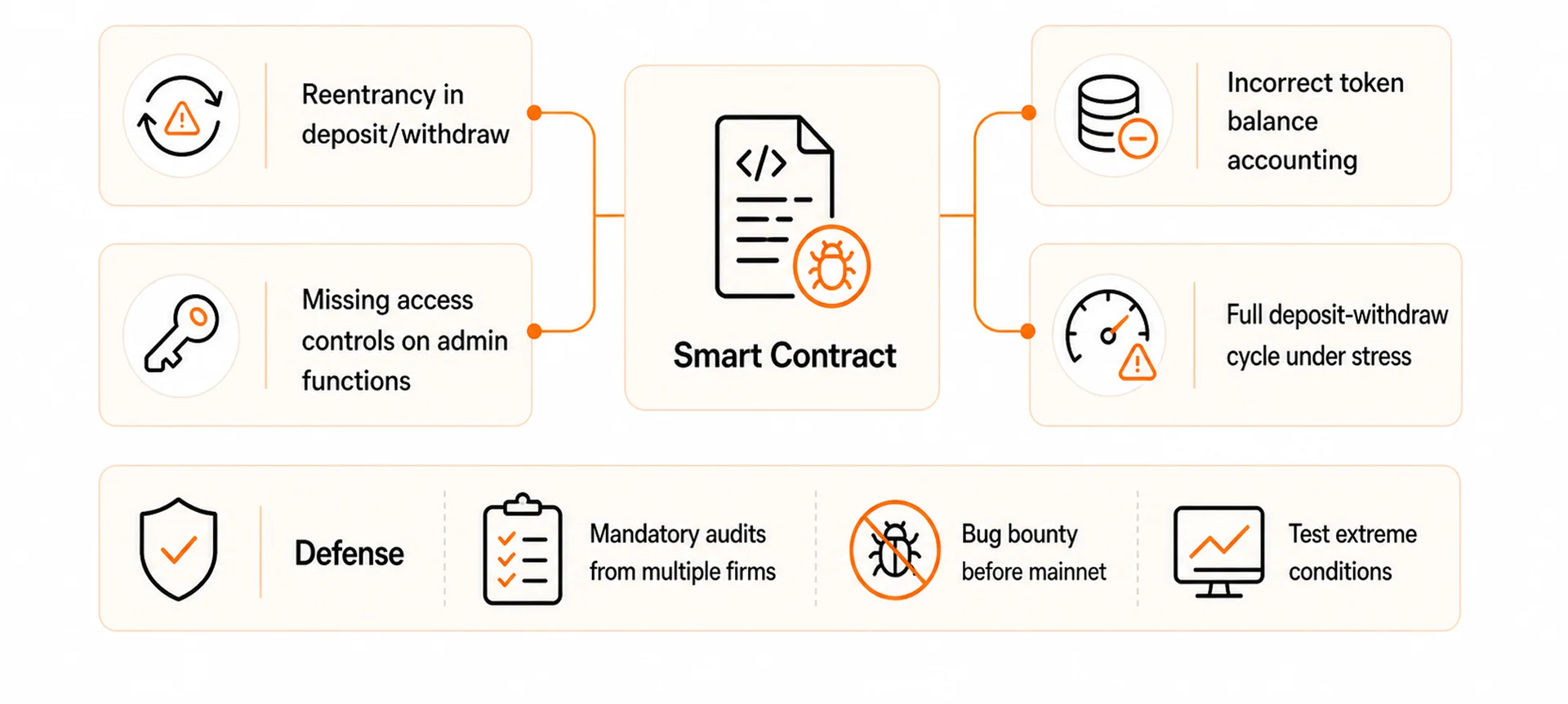
3. Smart contract vulnerabilities
The attack surface of bridges is larger than that of typical DeFi protocols. Common vulnerabilities: re-entry during deposits/withdrawals, lack of access control in management functions, and errors in calculating token balances. Defense: Before the mainnet launches, it must be audited by multiple audit firms and a bounty scheme for vulnerabilities is established. Testing a full deposit-withdrawal cycle under extreme conditions.
4. Oracle control
If the bridge relies on the oracle to verify events on the source chain, then the attacker controlling the oracle controls the bridge. This is the root cause of multiple events that have resulted in hundreds of millions of dollars in losses. Defense: Use multiple independent oracles and set arbitration requirements. Adding a time lock to large transfers allows for manual intervention.
5. Defense in depth
No single defensive method is foolproof. Combined use:
- 1.Limit each transaction and daily limit — limit the explosion radius
- 2.Fuse mechanism — automatically pauses in case of abnormality
- 3.Upgrade and management operations use multi-signature time locks
- 4.Monitor abnormal deposit/withdrawal patterns
The teams that survived the bridge attack were those who saw security as an uncompromising design constraint, not a checklist item.